For decades, skincare focused almost entirely on the surface: exfoliate, hydrate, smooth, repeat. While these steps still matter, modern skin science has revealed a deeper truth; healthy, youthful skin isn’t created on the surface alone.
It’s built from within, at the cellular level. This shift has given rise to regenerative skincare, an approach that supports the skin’s natural ability to repair, rebuild, and renew itself.
As we age, the skin’s internal communication system slows down. Cells don’t “talk” to each other as efficiently, collagen production declines, and repair processes become sluggish. The result is thinner skin, wrinkles, uneven tone, and loss of firmness.
Today’s most advanced treatments aim to restore this communication network rather than simply masking its decline. At the center of this revolution is peptide skincare; a science-backed way to tell skin cells how to act young again.
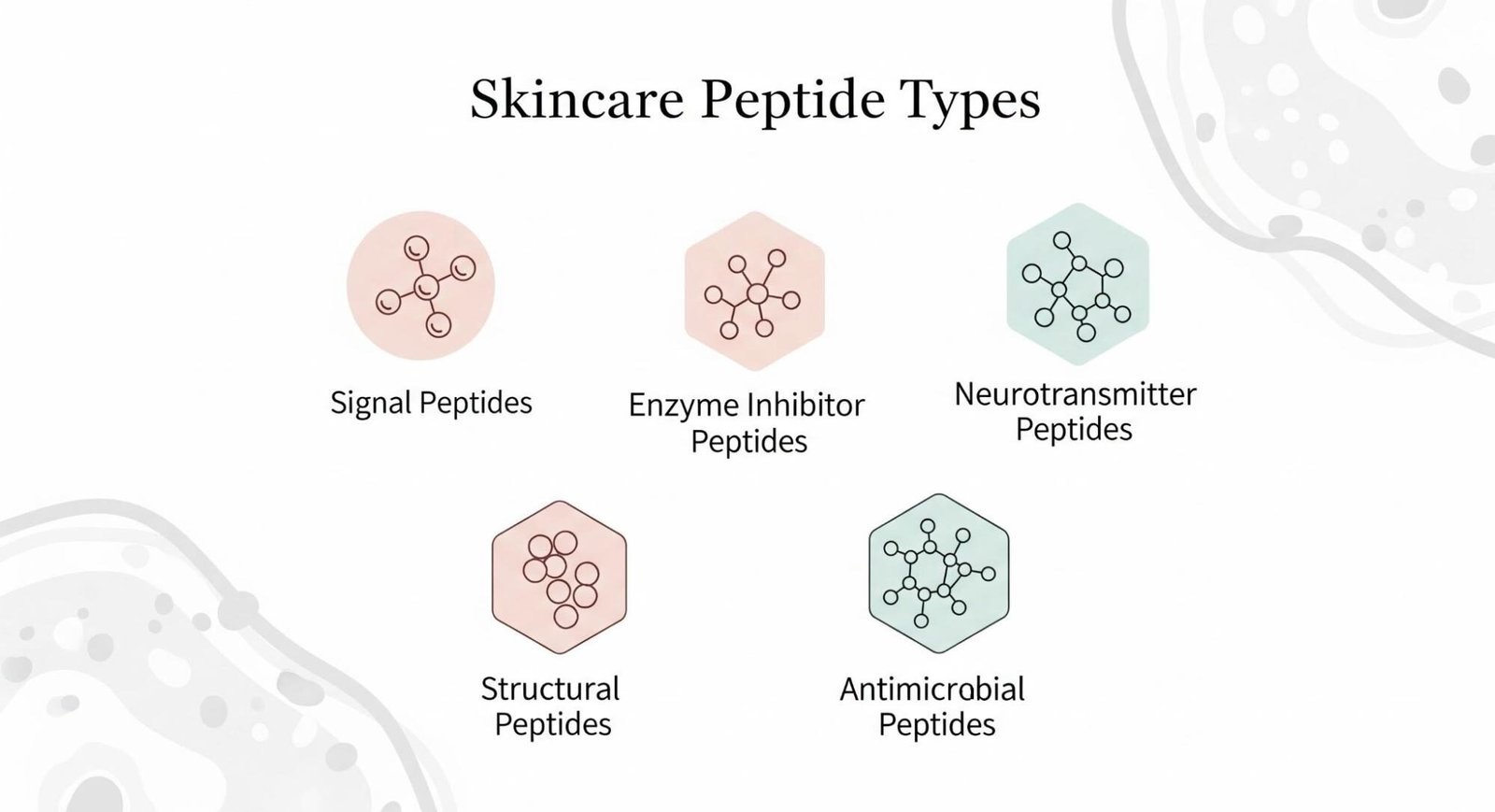
What Peptides Are: The Cell Messengers That Trigger Repair
Peptides are short chains of amino acids; the same building blocks that make up proteins like collagen, elastin, and keratin. But peptides aren’t structural components themselves. Instead, they act as messengers, delivering specific instructions to skin cells.
Think of peptides as text messages sent between cells. When a peptide reaches its target, it signals the skin to perform a specific function, such as:
- Increasing collagen and elastin production
- Accelerating cellular repair
- Reducing inflammation
- Improving skin barrier strength
- Regulating pigmentation
In youthful skin, these messages are sent naturally and frequently. With age, sun exposure, stress, and inflammation, those messages weaken or stop altogether.
Peptide skincare works by replacing or amplifying those lost signals; essentially reminding the skin how to behave like younger skin.

Cell Signalling & Collagen: How Skin Is Told To Rebuild
To understand why peptides are so powerful, it’s important to understand cell signalling skin pathways. Skin cells don’t act randomly; they respond to biochemical signals. When collagen breaks down (as it does with aging) the skin normally responds by producing more.
However, aging skin doesn’t always receive or respond to that signal effectively.
Certain peptides are designed to mimic the fragments of broken collagen. When fibroblast cells detect these fragments, they interpret them as a call to action: collagen has been damaged; repair is needed.
This triggers increased production of collagen, elastin, and other structural proteins.
Other peptides influence muscle contraction, inflammation, or melanin production, making them valuable for addressing expression lines, redness, or hyperpigmentation.
The key is that peptides don’t force the skin to change; they communicate with it. This makes them ideal for long-term skin health rather than quick, temporary fixes.
HydroPeptide Technology: Advanced Peptides With Precision Delivery
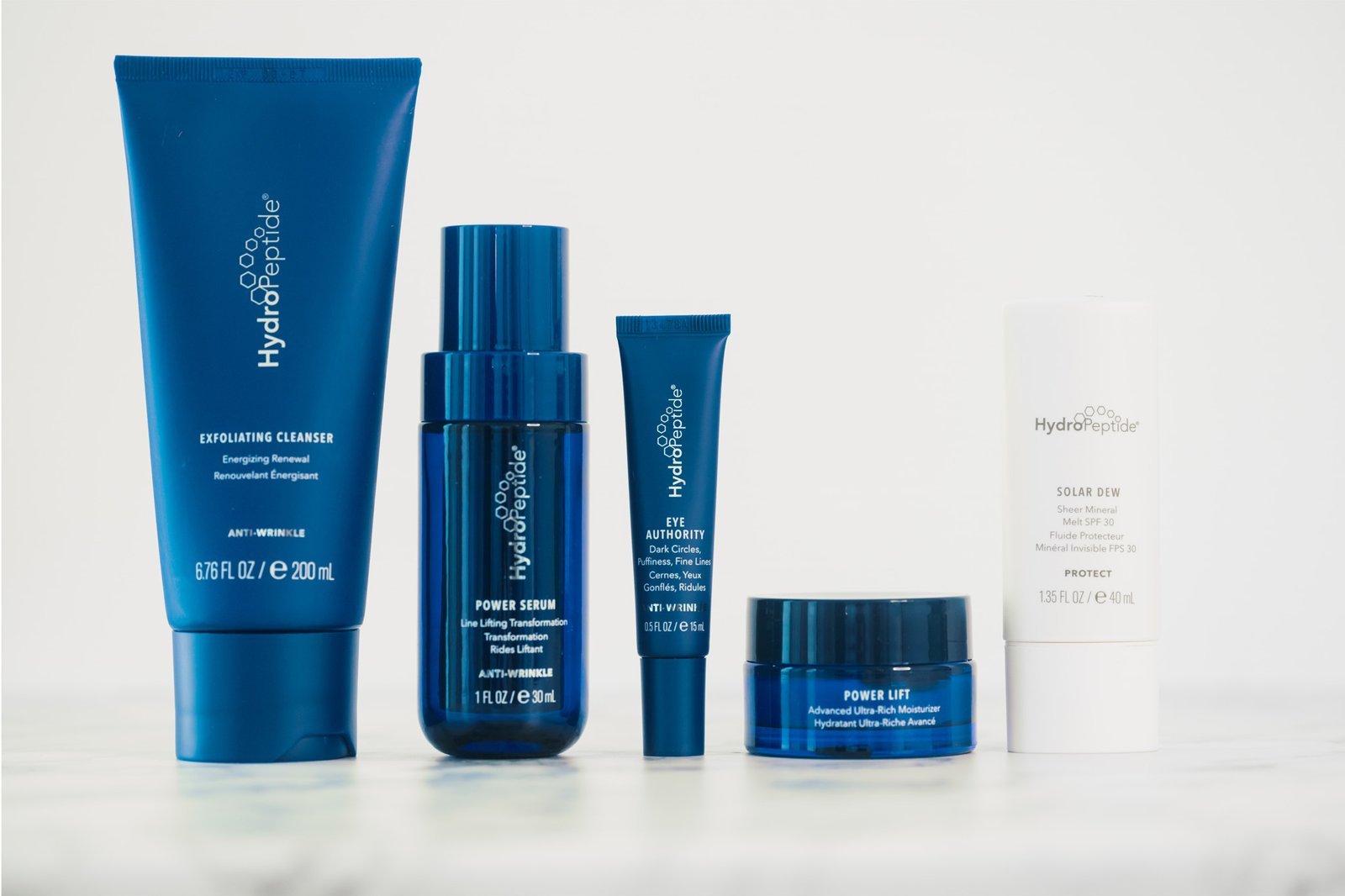
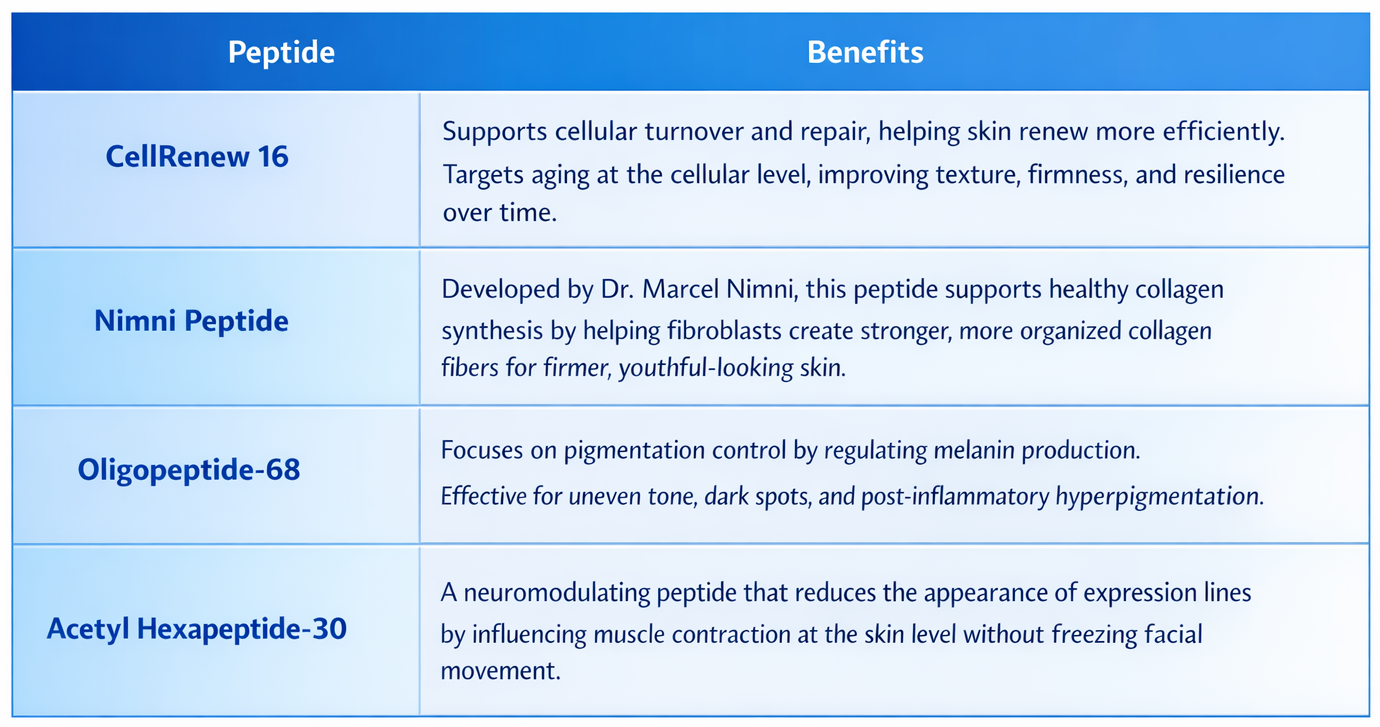
Not all peptide formulations are created equal. HydroPeptide is a leader in peptide skincare because it combines clinically researched peptides with advanced delivery systems that ensure they actually reach their intended targets.
Some standout components include:
What truly sets HydroPeptide apart is its patented delivery technology. Peptides are notoriously delicate and can degrade before reaching their target if not properly stabilised.
HydroPeptide formulations are designed to protect peptides and enhance penetration, ensuring they can perform their signalling functions effectively.
Why Not All Peptides Are Equal: Formulation and Penetration Matter
One of the biggest misconceptions in skincare is that simply having peptides listed on a label guarantees results. In reality, peptide performance depends on several critical factors:
- Peptide type and structure – Not all peptides signal the same functions.
- Concentration – Too little is ineffective; too much can cause irritation.
- Stability – Peptides must be protected from degradation.
- Delivery system – Peptides must penetrate the skin barrier to reach target cells.
Many over-the-counter products include peptides in minimal amounts for marketing appeal rather than clinical efficacy. Without proper formulation, these peptides sit on the surface and never participate in cell signalling skin processes.
High-quality peptide skincare focuses on bioavailability; making sure peptides are delivered intact, active, and in the right environment to do their job.
This is where professional and medical grade skincare dramatically outperform standard cosmetic products.

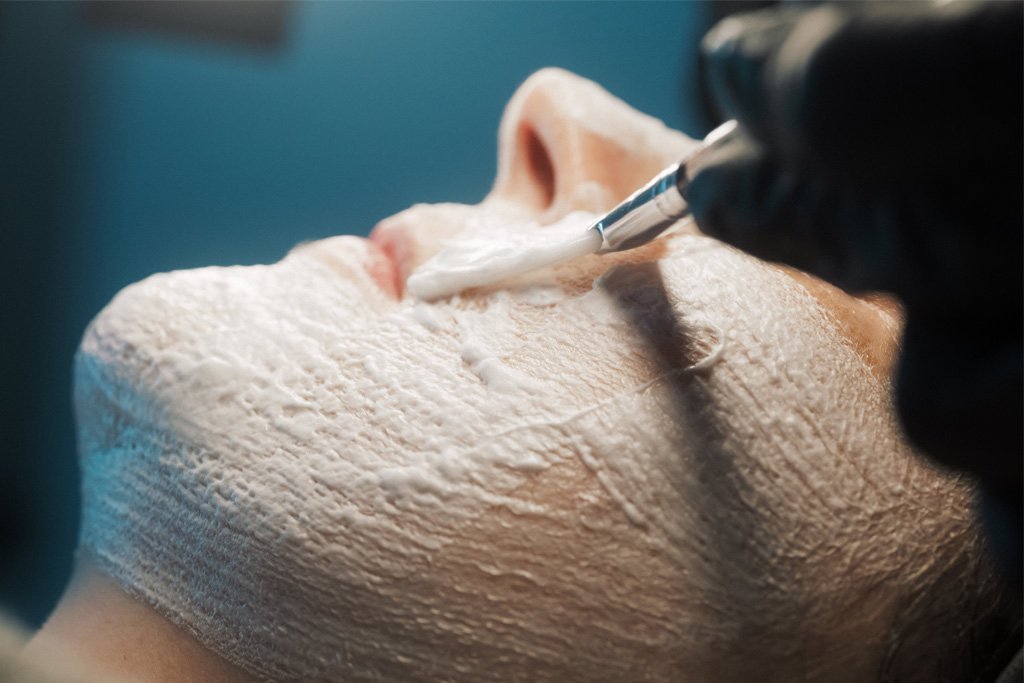
Clinical vs Cosmetic Skincare: Why Skin Suite Uses Medical Grade
The difference between cosmetic and medical grade skincare lies in formulation, testing, and penetration. Cosmetic products are designed to improve appearance temporarily. Medical-grade products are designed to create biological change within the skin.
At Skin Suite, peptide-based treatments are chosen for their clinical backing, concentration, and delivery systems, not trends.
Medical-grade formulations like HydroPeptide are supported by research, often tested in controlled clinical settings, and designed to work alongside professional treatments.
This approach ensures that regenerative skincare isn’t just a buzzword; it’s a measurable, science-driven process.
By supporting cell signalling, collagen regeneration, and barrier health, medical-grade peptide skincare creates results that improve over time rather than fading when product use stops.
The Future of Youthful Skin Is Regenerative
True skin rejuvenation doesn’t come from scrubbing harder or layering more products. It comes from understanding how skin cells communicate and restoring that communication.
Peptides represent one of the most sophisticated tools in modern skincare because they work with the skin’s biology rather than against it.
By activating cell signalling pathways, supporting collagen production, and enhancing repair mechanisms, peptide skincare offers a smarter, more sustainable path to youthful skin.
Combined with advanced technologies like those found in HydroPeptide and medical grade skincare, peptides are redefining what anti-aging really means.
Ready To Experience Peptide-Powered Skin Regeneration?
If you’re ready to move beyond surface-level skincare and explore true regenerative solutions, we invite you to book a Skin Health Consultation with Dr Lauren.
Our experts will assess your skin, discuss your goals, and create a personalised plan using medical-grade, peptide-driven treatments designed to support long-term skin health.
Because younger-looking skin isn’t about covering flaws; it’s about teaching your skin how to heal itself.
Bibliography:
- HydroPeptide – 2025 – How Do Peptides Help with Skin Ageing? The Science Explained [online] Available at:
https://hydropeptide.co.uk/blogs/skincare-routines/how-do-peptides-help-with-skin-ageing-the-science-explained?srsltid=AfmBOorS3TC8hfUnvnrdrBqJYb_NYrE45zR6PzrKk2O1cBVA6wPSgH8g - Cascade – 2025 – The Power of Peptides in Skincare [online] Available at:
https://cascadeeyeskin.com/blog/the-power-of-peptides-in-skincare/ - Be Me – 2025 – The Science Behind Peptides and Their Anti-Ageing Power [online] Available at:
https://www.bemewoman.com/blogs/be-me/the-science-behind-peptides-and-their-anti-ageing-power?srsltid=AfmBOopUEhauMCZIFEHgmFidIheOwpqGwxDshfswR60-gJdg76X76bwG