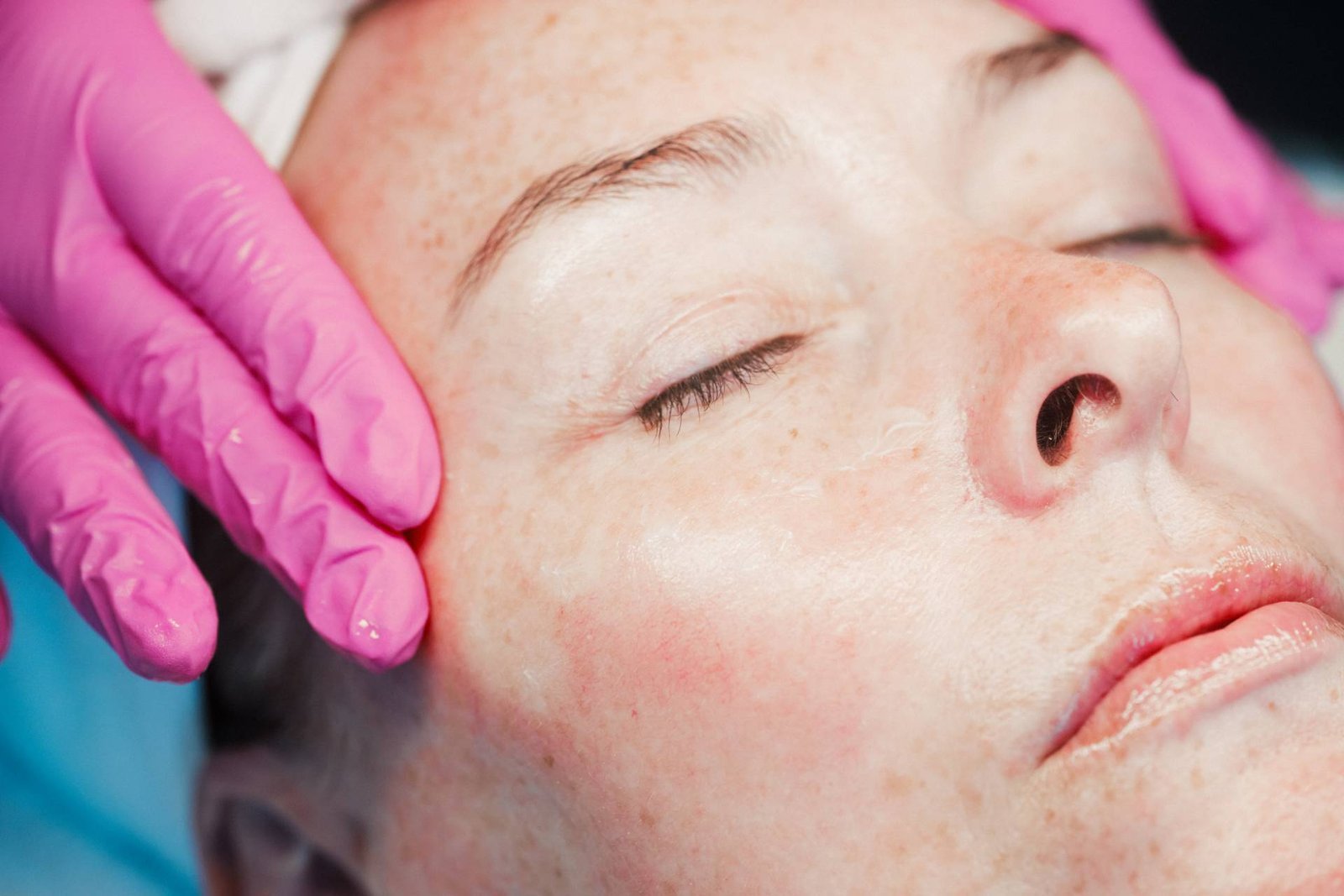
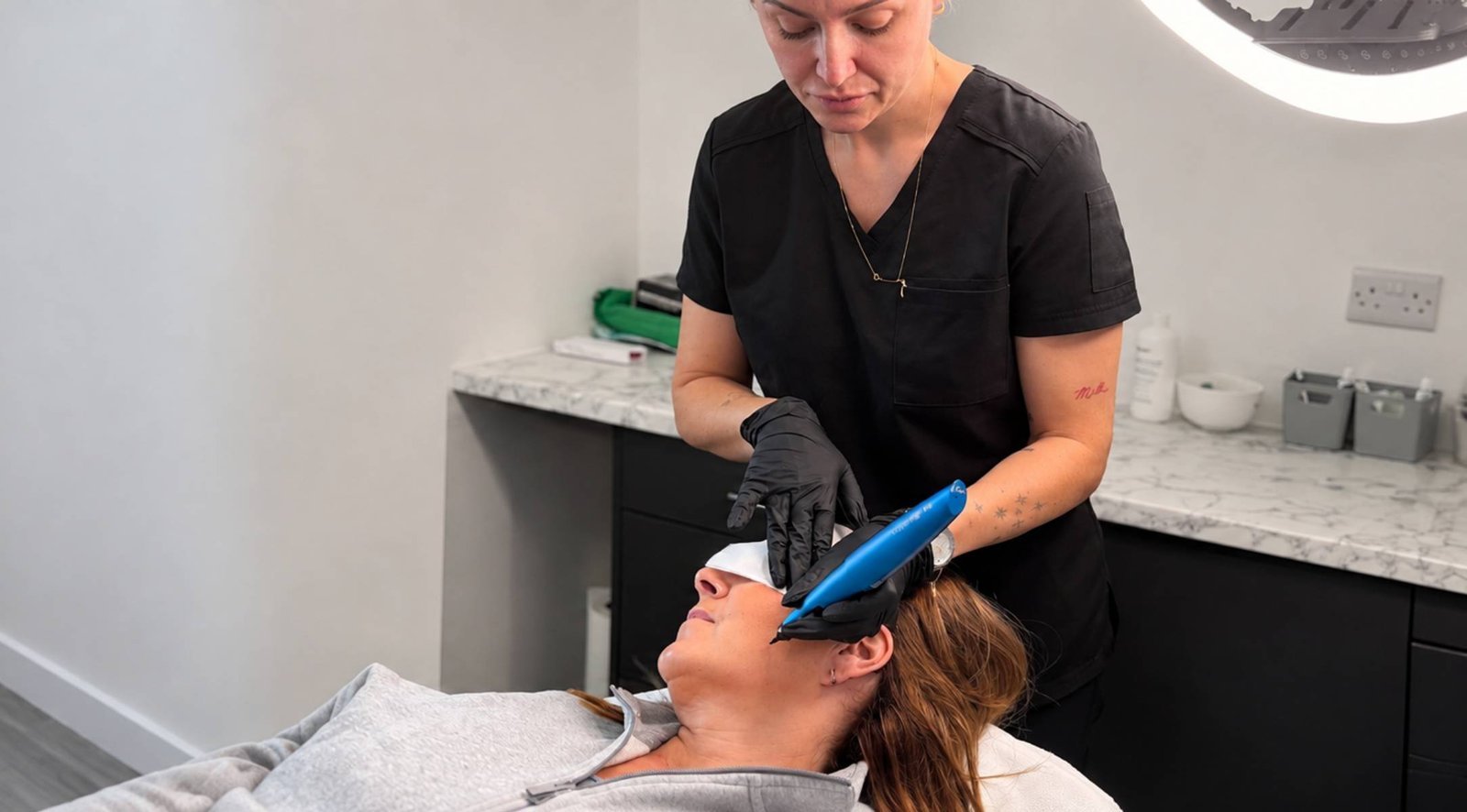
The goal of aesthetic treatments today is all about subtle, natural-looking enhancements. That’s why cosmetic fillers, also known as dermal fillers, have become so popular. People want to smooth wrinkles, restore volume, and enhance their features in a way that looks effortless [4].
It’s all about balance, technique, and using fillers to create subtle results.
So, what exactly are dermal fillers?
They’re gel-like substances that are injected under the skin to add volume and plump specific areas [7]. While they’re often used in the lips and cheeks, they can also be used for non-surgical nose jobs, jawline contouring, and even to rejuvenate hands and feet [7].
As we age, our faces naturally change. Bone structure shifts, fat redistributes, and skin loses elasticity [10]. This can lead to sagging, hollow areas, and wrinkles. Dermal fillers help restore lost volume, redefine facial contours, and bring back a youthful appearance without surgery [10].
The best filler work isn’t obvious, it just enhances your features naturally.
What Are Cosmetic Fillers Made Of?
Types of Fillers & Their Functions
- Hyaluronic Acid (HA) Fillers:
- The most common type of cosmetic filler is made from Hyaluronic acid (HA) which is a naturally occurring sugar found in skin, joints, and soft tissues, known for its ability to attract water and maintain hydration [8][9].
- As we age, our bodies break down HA faster than they produce it, leading to volume loss and making HA fillers an effective solution [9].
- It is used for lips, under-eye hollows, and fine lines [2].
- Lasts 6–18 months [3].
- Examples: Juvederm and Restylane [3].
There are also several synthetic fillers that provide longer-lasting results [8]:
- Calcium Hydroxylapatite (CaHA) Fillers
- It’s a mineral-based filler that provides volume while stimulating collagen for long-term firmness.
- It is best for deeper wrinkles, cheek augmentation, and jawline contouring.
- Lasts 12–18 months [2].
- Example: Radiesse [3].
- Poly-L-Lactic Acid (PLLA) Fillers:
- It stimulates collagen production rather than providing instant volume. Ideal for restoring volume in cheeks and temples, with gradual results lasting up to two years [3][4].
Example: Sculptra [4].
- It stimulates collagen production rather than providing instant volume. Ideal for restoring volume in cheeks and temples, with gradual results lasting up to two years [3][4].
- Polymethyl Methacrylate (PMMA) Fillers:
- It contains microspheres that provide structural support while encouraging collagen growth.
- It is used for deep wrinkles, acne scars, and facial contouring [2].
While permanent fillers may seem appealing, they come with higher risks, making temporary fillers the safer choice [9]. Consulting a professional injector ensures the best results.

How Do Fillers Work Under the Skin?
Dermal fillers volumise, hydrate, and contour the skin for a youthful look. The most common type, HA fillers, are synthetically manufactured through fermentation and cross-linking with proteins to form a sterile gel for injection [8].
- Volumising & Contouring Effects:
HA fillers restore lost volume by replenishing the skin’s natural volume, which diminishes with age [5]. Cross-linked HA molecules create a thicker gel that lasts longer and provides structural support for facial contouring, such as enhancing the cheeks and jawline [9]. Other fillers, like CaHA and PLLA, stimulate collagen production, gradually improving skin firmness [5].
- Hydrating & Skin-Boosting Benefits:
Hyaluronic acid is a powerful humectant, meaning it attracts and retains moisture, giving the skin a plump appearance [5]. Different molecular weights determine how deeply the filler sits, smaller molecules penetrate deeper, while larger ones stay closer to the surface [9].
Once injected, fillers undergo mechanical stress and compression which influences how they integrate into the tissue and adapt to facial movements [10]. Scientists design fillers to mimic natural elasticity, ensuring subtle results [9].
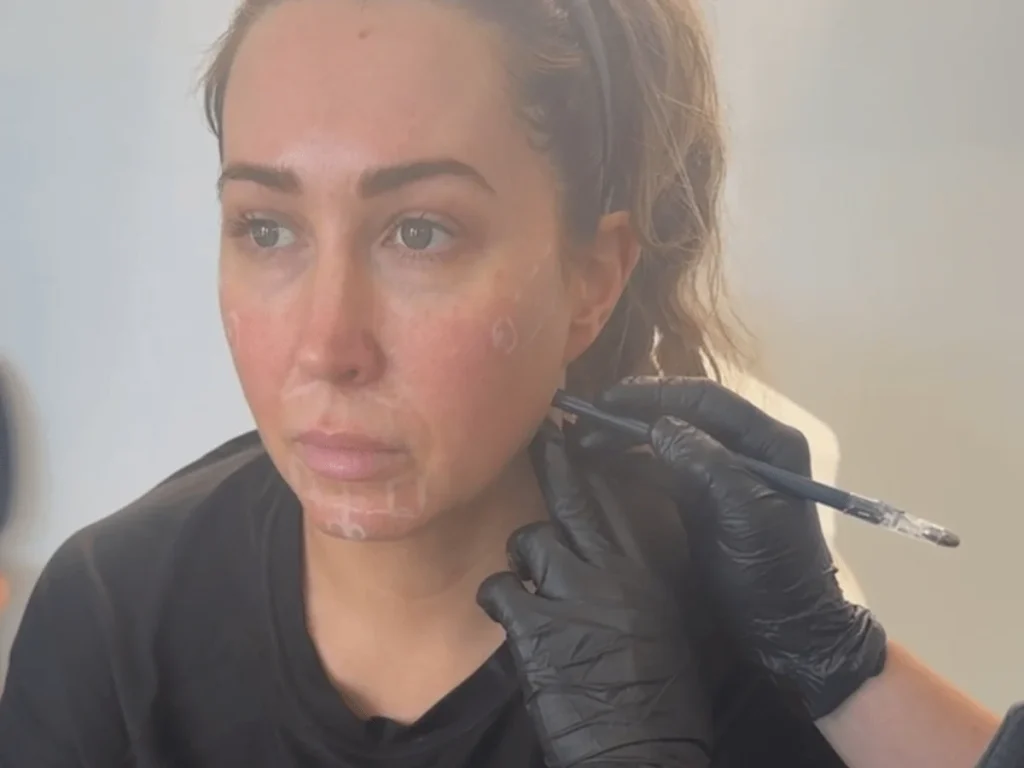
Different Types for Different Results
Cosmetic fillers are versatile, with different types designed for specific areas. Whether enhancing lips, defining cheekbones, or sculpting the jawline, the right dermal filler creates natural enhancements tailored to your individual goals [2].
Best Fillers for Each Facial Area
- Lips: Soft, flexible HA fillers enhance volume and smooth lines [2][5].
- Cheeks: Thicker HA or CaHA fillers restore lost volume and lift sagging skin [2][3].
- Jawline & Chin: Firmer fillers provide structure and definition [3][5].
- Under Eyes: Lightweight HA fillers help reduce hollows and dark circles [2][5].
- Nose: Moderately dense HA fillers refine the nose bridge and correct asymmetry [2].
- Smile Lines: Malleable but firm fillers smooth deep folds around the mouth [2][3].
- Acne Scars: PLLA fillers stimulate collagen and fill depressions [2][5].
Selecting the right filler depends on individual goals. Consulting a professional injector ensures you will make the best choice for natural, long-lasting results [2][5].
Why Technique Matters
Choosing a skilled injector is absolutely crucial for natural enhancements. Aesthetic treatments are becoming increasingly popular making it essential to get fillers from an expert for best results [1][6].
The benefits of choosing a professional injector include:
- Safety & Precision: Trained injectors follow strict protocols, reducing risks [1].
- Professional Standards: They use high-quality products and maintain sterile conditions [1].
- Superior Results: Expertise leads to balanced, long-lasting cosmetic enhancements [1].
Investing in a skilled injector ensures not only better outcomes but also a safer experience [1][6].
The Role of Personalised Consultations
Great results start with a great plan. A personalised consultation ensures your filler treatment is expertly tailored to enhance your features.
Book your consultation today at Dr Lauren Medical Aesthetic Clinic and take the first step toward effortlessly smooth, sculpted, and beautifully balanced results!

Bibliography
- AL Aesthetics. (2024). The Importance of Choosing Qualified Injectors. doi:
https://doi.org/10f95983/64a2791c7be4d3515b06a55a_fav. - British College of Aesthetic Medicine. (n.d.). Dermal Fillers. [online] Available at:
https://bcam.ac.uk/patients/treatments/dermal_fillers.aspx. - Carlisle (2024). The Science of Dermal Fillers: Types, Uses, and Benefits Explained. [online] VL Aesthetics. Available at:
https://www.vlaesthetics.co.uk/science-of-fillers/. - Chiang, Y.Z., Pierone, G. and Al-Niaimi, F. (2016). Dermal fillers: pathophysiology, Prevention and Treatment of Complications. Journal of the European Academy of Dermatology and Venereology, 31(3). doi:
https://doi.org/10.1111/jdv.13977. - Coppertop Dental Surgery. (2023). How Do Dermal Fillers Work in Facial Aesthetic Treatments? [online] Available at:
https://coppertopsurgery.co.uk/how-do-dermal-fillers-work-in-facial-aesthetic-treatments/. - Essence Medical. (n.d.). The Importance of Choosing Experienced Aesthetic Doctors for Cosmetic Procedures. [online] Available at:
https://essencemedical.co.uk/importance-of-choosing-experienced-aesthetic-doctors-for-cosmetic-procedures/. - GOV.UK. (2021). Botulinum Toxin and Cosmetic Fillers for under 18s. [online] Available at:
https://www.gov.uk/government/publications/botulinum-toxin-and-cosmetic-fillers-for-under-18s/botulinum-toxin-and-cosmetic-fillers-for-under-18s?.com. - Stephanie (2023). Are Dermal Fillers Safe and Other Important Questions? [online] Aesthetics by Stephanie. Available at:
https://aestheticsbystephanie.com/are-dermal-fillers-safe/. - The Academy Clinic. (n.d.). What are Dermal Fillers Made Of? [online] Available at:
https://theacademyclinic.co.uk/what-are-dermal-fillers-made-of/. - Wongprasert, P., Dreiss, C.A. and Murray, G. (2022). Evaluating Hyaluronic Acid Dermal fillers: a Critique of Current Characterisation Methods. Dermatologic Therapy, 35(6). doi:
https://doi.org/10.1111/dth.15453.