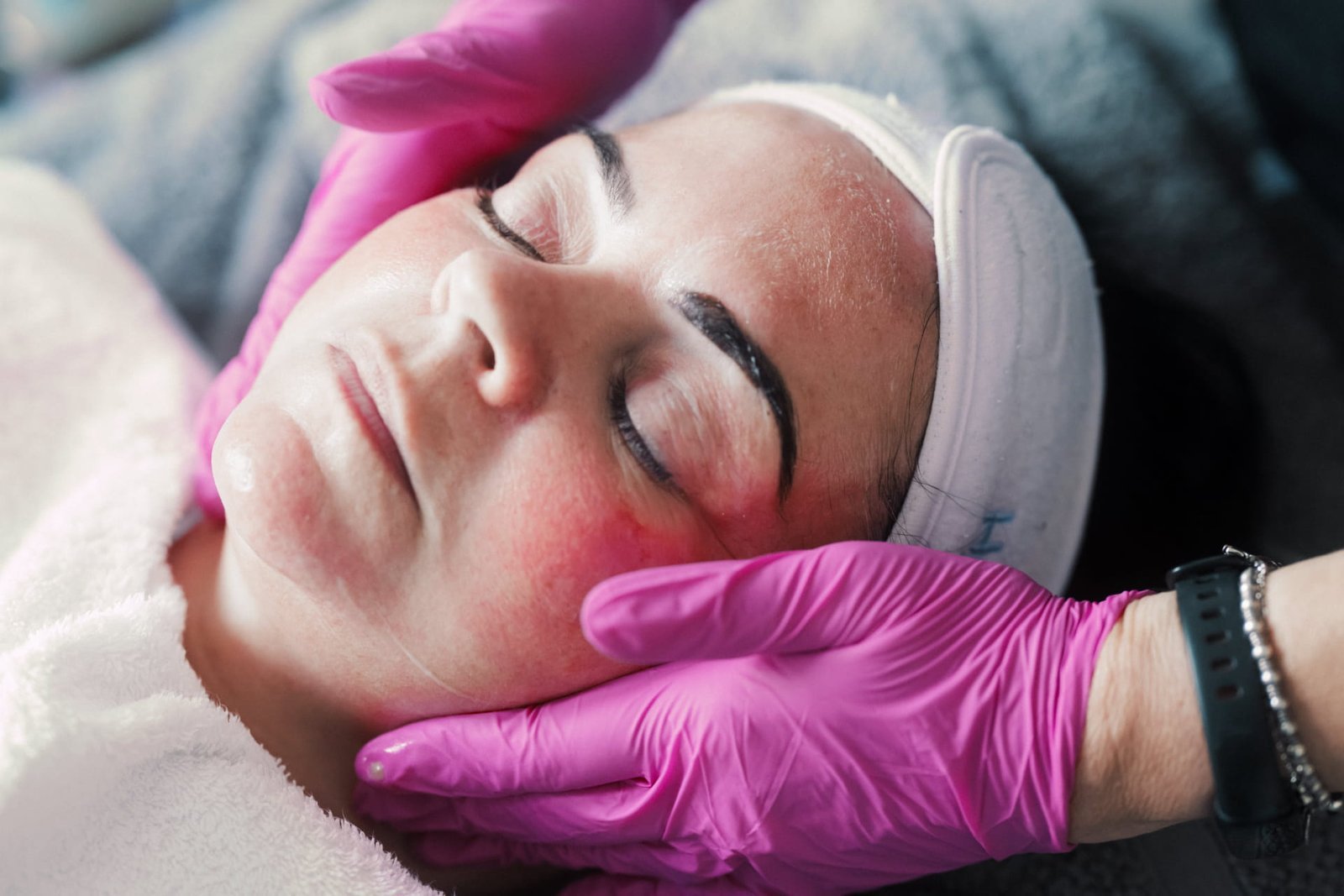
When we think of sun protection, we tend to picture hot summer days or holidays abroad, but the truth is that how the sun damages your skin begins long before you notice redness or sunburn. Ultraviolet (UV) radiation is present all year round, even on overcast days in Glasgow, where it penetrates the skin, damages cells and causes DNA changes that contribute to sun damaged skin.
Understanding how the sun damages your skin is about more than avoiding sunburn.
It is one of the most important steps you can take to protect your long-term skin health. Rather than treating sunscreen as something you only reach for in summer, SPF skincare should be part of your morning routine every day, whatever the weather. Consistent daily SPF remains one of the most effective anti-ageing strategies because it helps prevent damage before it occurs.
At Dr Lauren’s Medical Aesthetics Clinic, we recommend the HydroPeptide SPF range for daily protection. These medical-grade formulations combine broad-spectrum UV defence with hydration and antioxidant support in lightweight, comfortable formulas that are designed to be worn every day.
Why the Sun Damages Our Skin
Although sunlight plays an important role in supporting vitamin D production, too much UV exposure can overwhelm your skin’s natural repair mechanisms, allowing damage to build up over time [1].
To understand how the sun damages your skin, it helps to first understand ultraviolet (UV) radiation. UV radiation is an invisible form of energy that penetrates both the surface and deeper layers of the skin, triggering biological changes that gradually affect its structure and function [6].
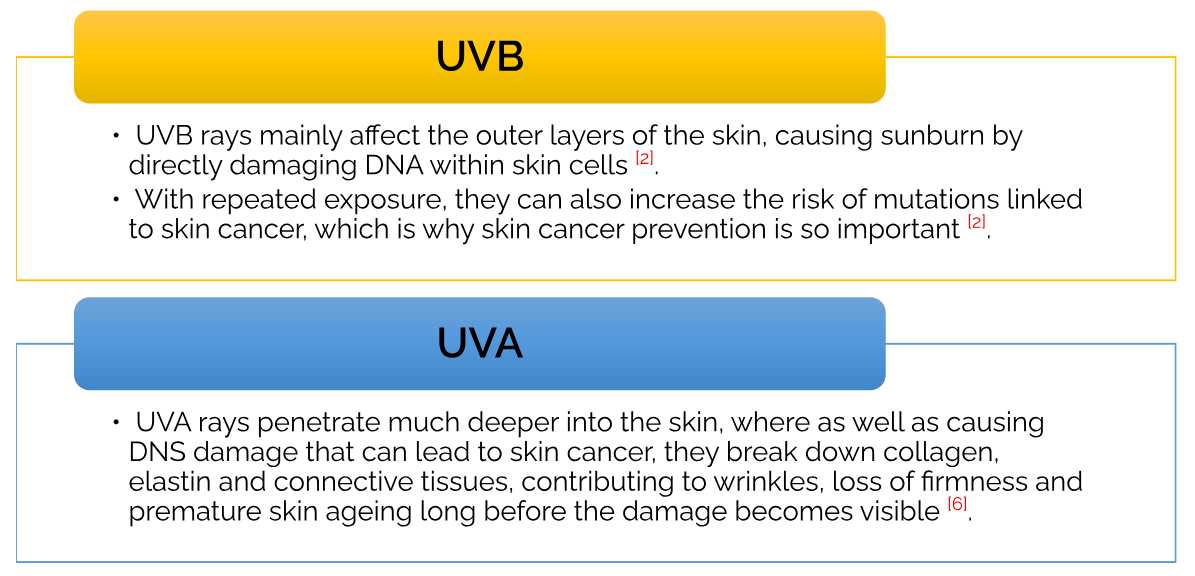
There are two main types of UV radiation that affect the skin: UVA and UVB rays, and each causes a different type of UV damage [6].
Many people are surprised to learn that clouds offer very little protection from ultraviolet radiation. Even on grey Scottish days, a large proportion of UVA radiation still reaches the skin, making broad-spectrum SPF an essential part of your daily routine, whatever the weather.
The Visible & Invisible Signs of Sun Damage
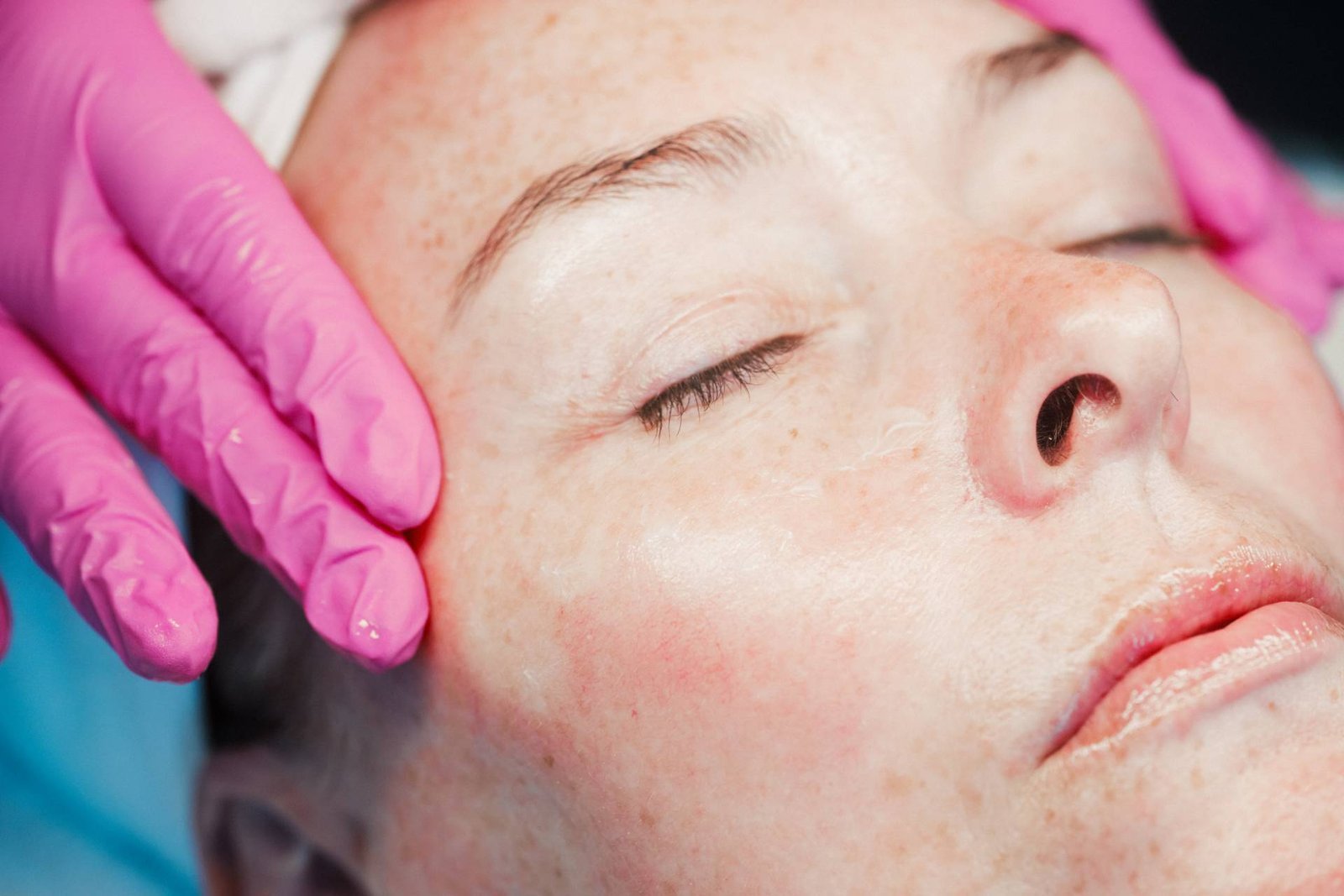
One of the reasons sun damaged skin can be so difficult to recognise is that the damage builds up slowly over many years.
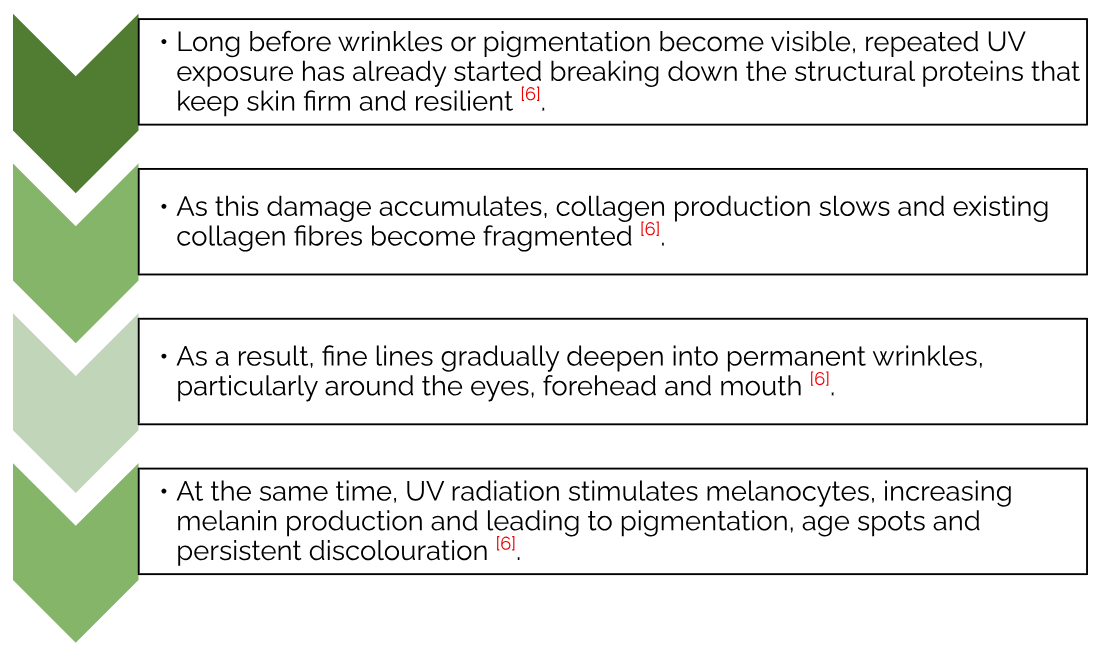
These are often the first signs people notice, but they represent only part of how the sun damages your skin, as much of the underlying damage continues to build long before it becomes visible.
Why SPF Is Your Best Anti-Ageing Product
Among all the skincare products available today, daily SPF remains the single most effective way to prevent future sun damage [4]. While aesthetic treatments can improve existing concerns, none can fully reverse years of cumulative UV exposure [6].
By applying SPF skincare every morning, you’re helping reduce collagen breakdown, limit pigmentation changes and support healthier skin ageing [7].
The reality is that preventing collagen loss is far easier than trying to rebuild it after years of UV damage [6]. This is why daily SPF should be the final step of your morning skincare routine, whatever the season or weather.
And if you’re looking for sunscreen in Glasgow, choose a formula you’ll genuinely enjoy wearing every day, because comfort and cosmetic elegance are what make long-term protection a habit.
Choosing the Right SPF for Your Skin
Not all sunscreens feel the same, which is why finding one that suits your skin type makes it much easier to wear every day. Different skin types have different hydration needs, sensitivities and cosmetic preferences, so there is no one-size-fits-all sunscreen.
Oily or combination skin often prefers lightweight formulas, while drier skin benefits from extra hydration. Sensitive skin may also benefit from carefully formulated products that minimise irritation while providing broad-spectrum protection against UVA and UVB rays [1].
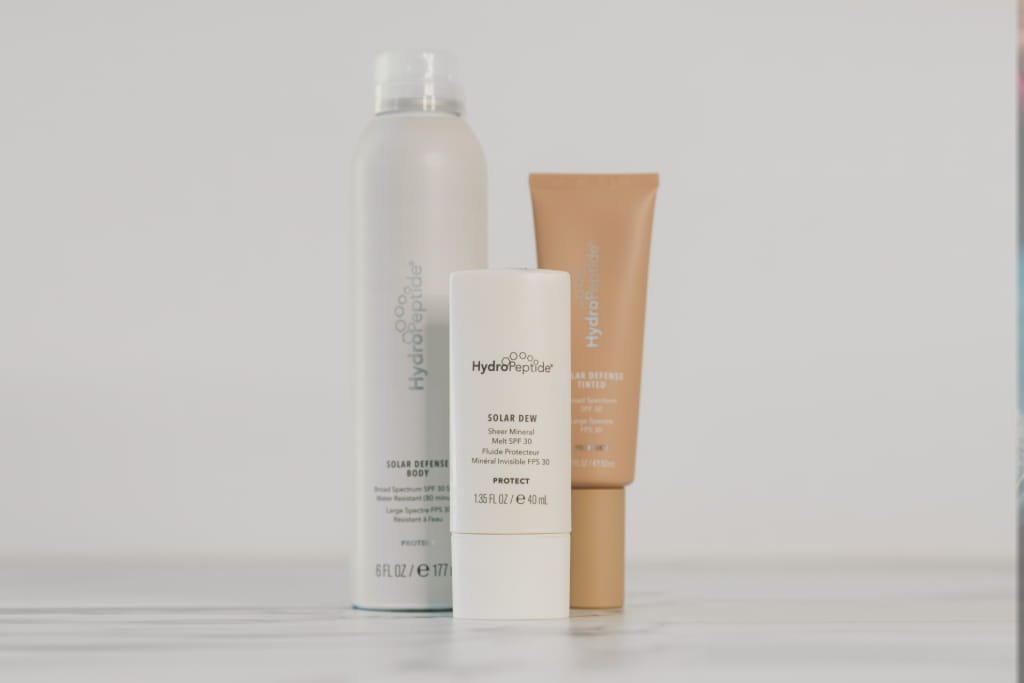
At Dr Lauren’s Medical Aesthetics Clinic, we recommend the medical-grade HydroPeptide Solar Defence SPF range, which combines advanced UV protection with ingredients that support skin health.
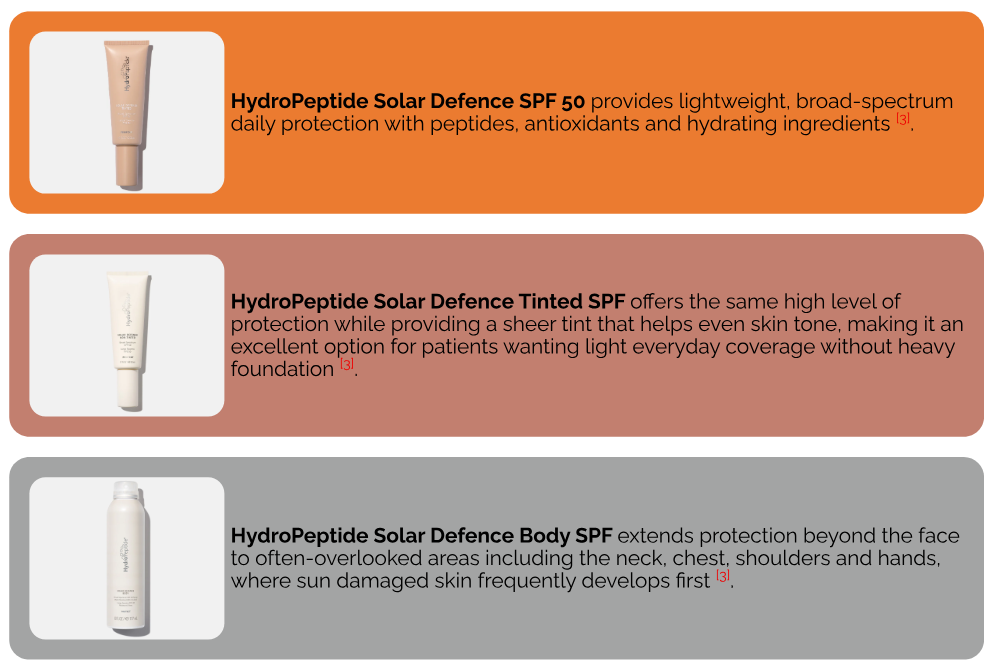
The easier a sunscreen is to wear, the more likely it is to become part of your daily routine. So, if you’re looking for sunscreen in Hamilton, choose a formula that suits both your skin type and lifestyle to help make long-term protection second nature [3].
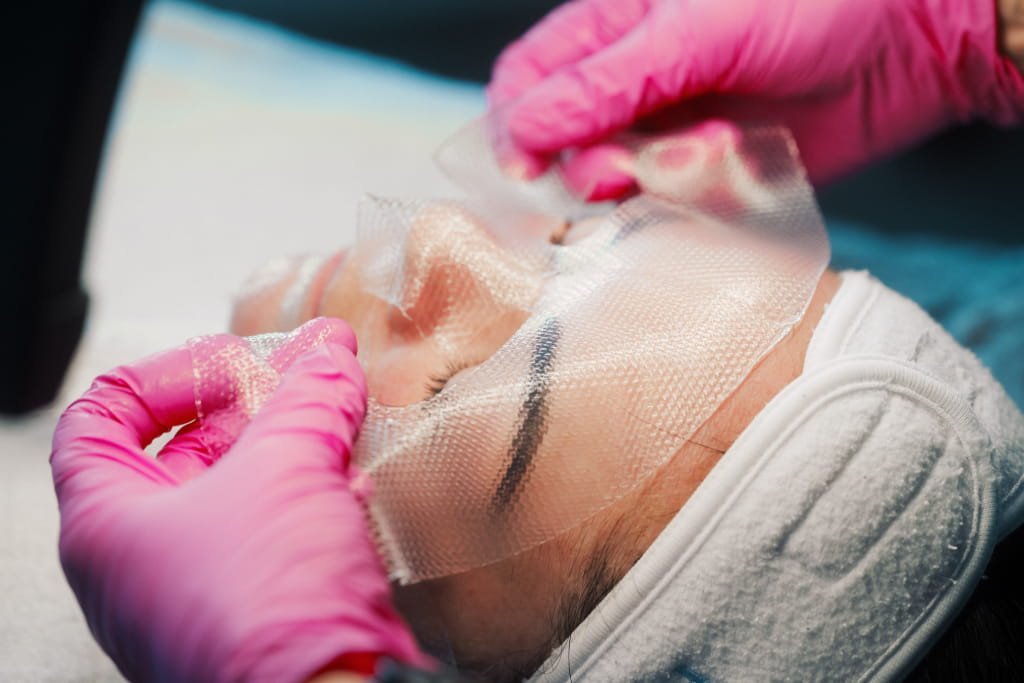
Repairing Existing Sun Damage
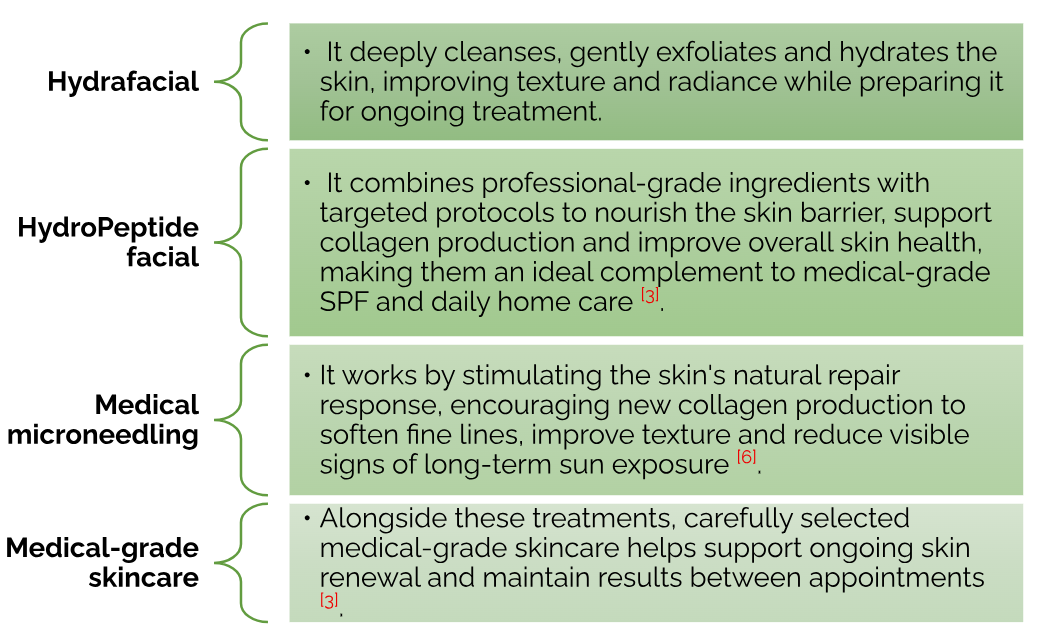
While prevention will always be the most effective strategy, professional treatments can make a real difference to the visible signs of sun damaged skin when combined with the right home care. At Skin Suite Hamilton, every treatment starts with a comprehensive skin analysis to assess pigmentation, dehydration, collagen loss and overall UV damage, allowing us to create a personalised treatment plan.
SPF Is for Every Season
Many people underestimate UV exposure in Glasgow because the weather often feels cool, but UVA radiation is present throughout the year, making daily SPF an everyday essential rather than a summer-only product.
This is why wearing daily SPF is just as important in autumn and winter as it is in summer for maintaining long-term skin health and reducing cumulative UV damage.
Simple habits can make a big difference, from applying sunscreen every morning and reapplying during prolonged outdoor activities to wearing protective clothing and seeking shade during periods of intense sunshine [4].
Understanding how the sun damages your skin helps change the way we think about sunscreen, not as something we only use on sunny days, but as a lifelong habit for healthier skin.
Protect Your Skin for Life
If you’d like personalised advice on protecting your skin, we’d love to help. Book a Free Skin Health Consultation at Skin Suite Hamilton where we offer professional skin analysis, tailored treatment plans and expert guidance on choosing the right HydroPeptide SPF products to keep your skin healthy, protected and radiant every day.
BIBLIOGRAPHY
- British Association of Dermatologists (n.d.) Phototherapy (NB-UVB). Available at:
https://www.bad.org.uk/pils/phototherapy-nb-uvb - Cancer Research UK (n.d.) Sun safety. Available at:
https://www.cancerresearchuk.org/about-cancer/causes-of-cancer/sun-uv-and-cancer/sun-safety - HydroPeptide (n.d.) All Products. Available at:
https://hydropeptide.co.uk/collections/all-products - NHS (n.d.) Sunscreen and sun safety. Available at:
https://www.nhs.uk/live-well/seasonal-health/sunscreen-and-sun-safety/ - NHS inform (n.d.) Sunburn. Available at:
https://www.nhsinform.scot/illnesses-and-conditions/injuries/skin-injuries/sunburn/ - Oxford University Hospitals NHS Foundation Trust (n.d.) Your skin and the sun. Available at:
https://www.ouh.nhs.uk/media/agpfgbhj/99052sun.pdf - Skin Health Info (British Association of Dermatologists) (n.d.) The sunscreen fact sheet. Available at:
https://www.skinhealthinfo.org.uk/sun-awareness/the-sunscreen-fact-sheet/