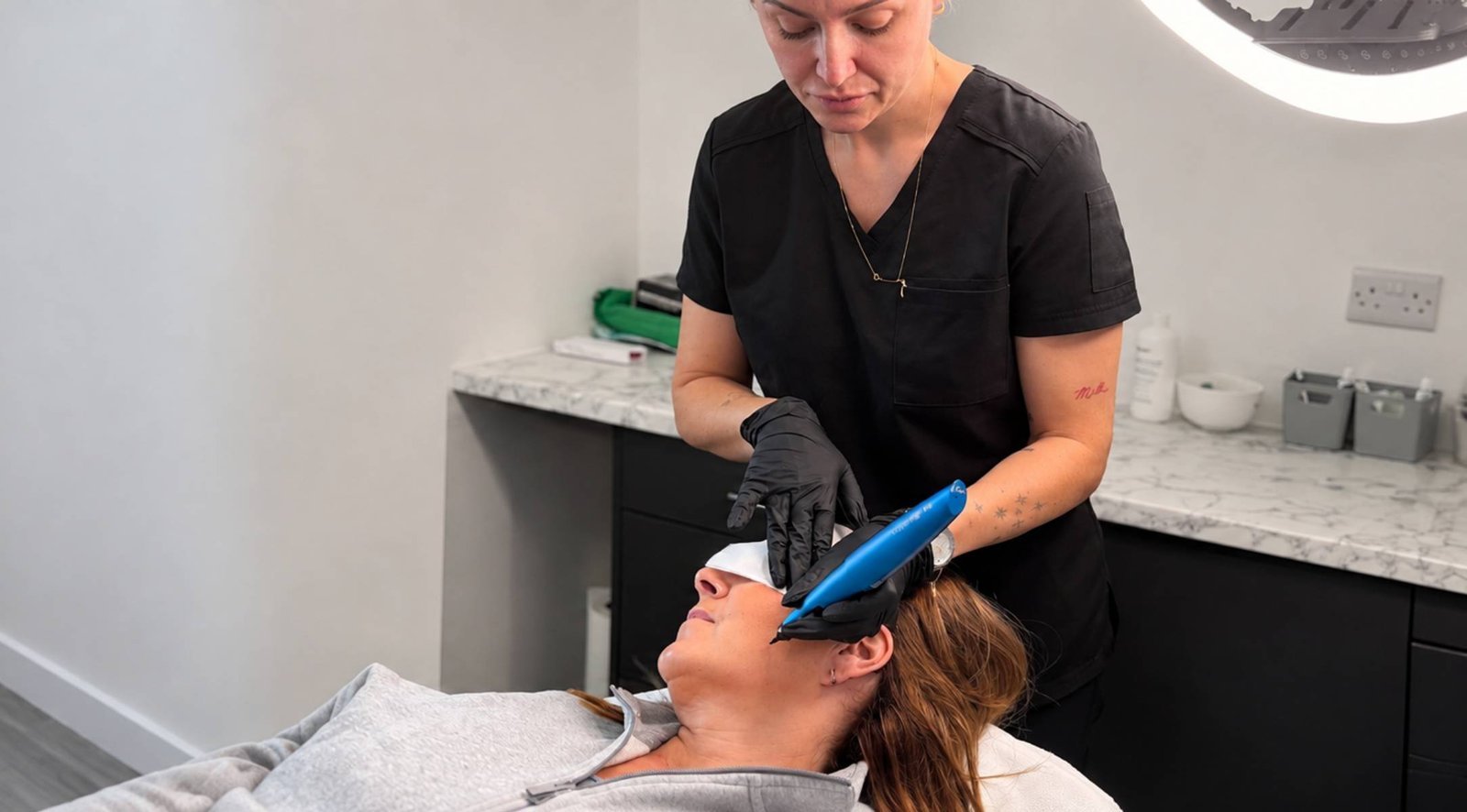
While wanting a mole removed is entirely understandable, there is one important step that should never be overlooked: safe assessment comes before cosmetic treatment.
At Dr Lauren Medical Aesthetics, the approach to skin lesion removal begins with consultation and diagnosis, rather than simply treating the lesion that a patient wants to have removed. This helps establish what the lesion is, whether removal is appropriate and if any further assessment is needed.
Why do people choose to have moles removed?
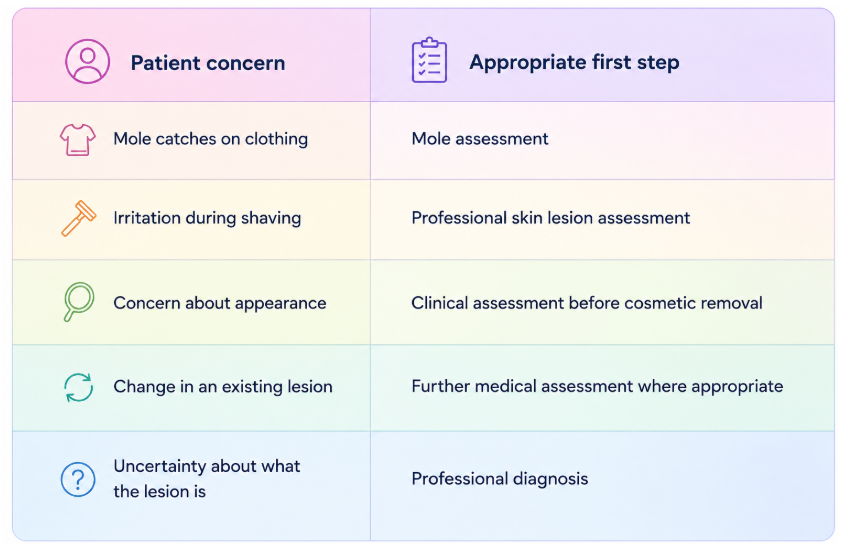
There are many reasons why someone may want a mole removed, and they do not necessarily relate to medical concerns.
A raised mole, for example, may repeatedly catch on clothing or jewellery. Moles on areas such as the neck, face or underarms can become irritated during shaving or other everyday activities. Others may simply dislike the appearance of a particular mole and feel more comfortable having it removed.
These cosmetic concerns are completely valid. A benign lesion can still be something a patient would prefer not to have.
However, the fact that a mole appears harmless does not mean it should automatically be treated as a cosmetic concern.
Before considering a cosmetic mole removal, the lesion should be assessed appropriately. The purpose is not to make patients unnecessarily concerned, but to make sure that the right diagnosis and treatment pathway are established from the beginning.
The key principle is simple:
Is it definitely a mole?
One of the reasons professional assessment is so important is that patients cannot always be expected to identify their own skin lesions.
Different types of skin lesions can sometimes look similar. What appears to be a mole may actually be another type of lesion, and distinguishing between them may require clinical experience and appropriate assessment.
This is why a mole check should not simply involve looking at a lesion and deciding whether it looks like a mole. Your clinician needs to consider the lesion itself alongside its history and relevant clinical features.
You should also avoid trying to diagnose a changing or unusual lesion yourself based solely on photographs or online information. Internet searches can be useful for general education, but they cannot replace an appropriate clinical assessment.
Why assessment comes before removal
The most important part of a safe mole removal journey is establishing whether removal is clinically appropriate.
At Dr Lauren Medical Aesthetics, the consultation-led approach is designed around this principle. The lesion is assessed before treatment is recommended, allowing the clinician to consider:
- What type of lesion it may be
- Its appearance and relevant clinical characteristics
- Its location, size and presentation
- Any relevant history provided by the patient
- Whether cosmetic removal is appropriate
- Whether further investigation or specialist assessment may be advisable
This distinction matters because a safe mole removal is not simply about having the right removal technique. Safety begins with making an appropriate decision about the lesion in the first place.
The assessment-first approach
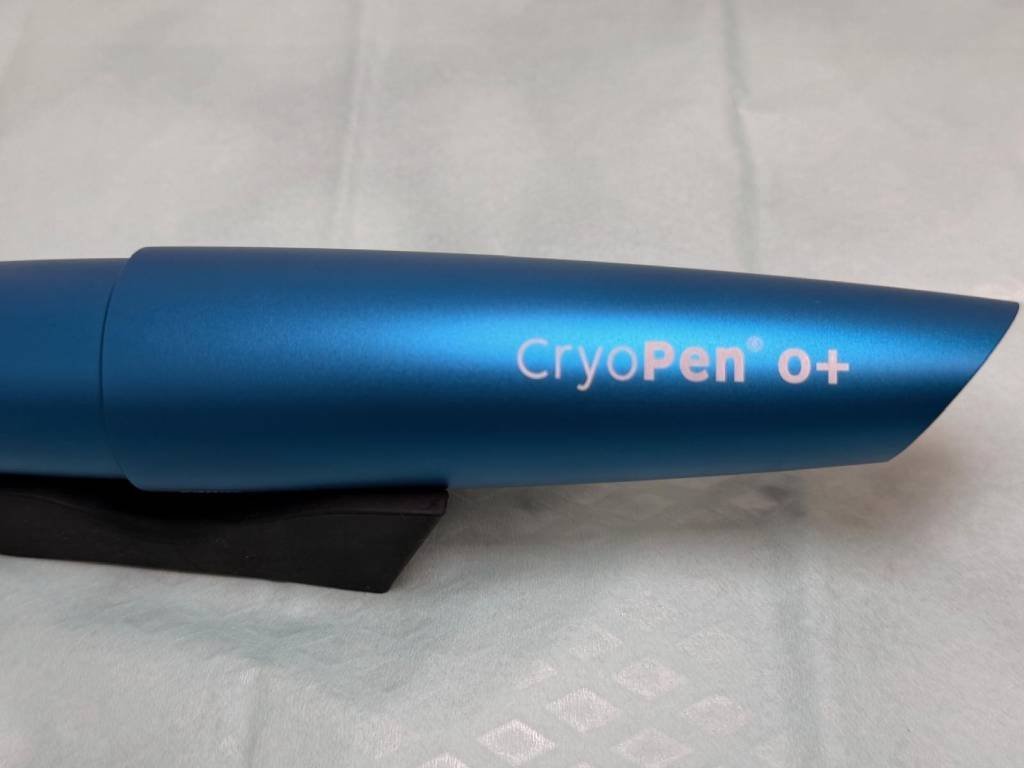
What if a mole needs further assessment?
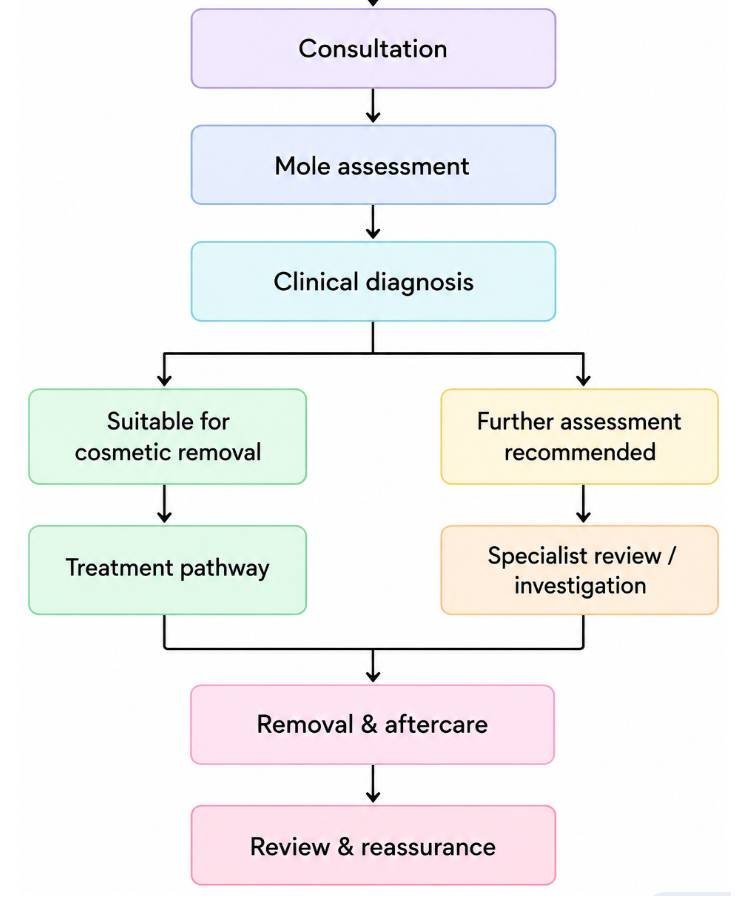
Not every lesion should immediately proceed to cosmetic treatment.
If Dr Lauren has any reason to believe that a lesion would benefit from further investigation or specialist review, cosmetic removal may not be recommended at that stage. Instead, the patient may be advised to seek an appropriate dermatology assessment.
This is where Map My Mole can support the patient journey. Where specialist dermatology assessment is appropriate, this can provide an additional route for evaluating a lesion rather than proceeding directly with cosmetic treatment.
Further assessment may be recommended when the appearance or history of a lesion means that a specialist opinion would be appropriate. The exact pathway will depend on the individual circumstances.
Importantly, being advised to seek further assessment does not mean that something is necessarily wrong. It means that the safest and most responsible next step is to establish greater diagnostic certainty before considering removal.
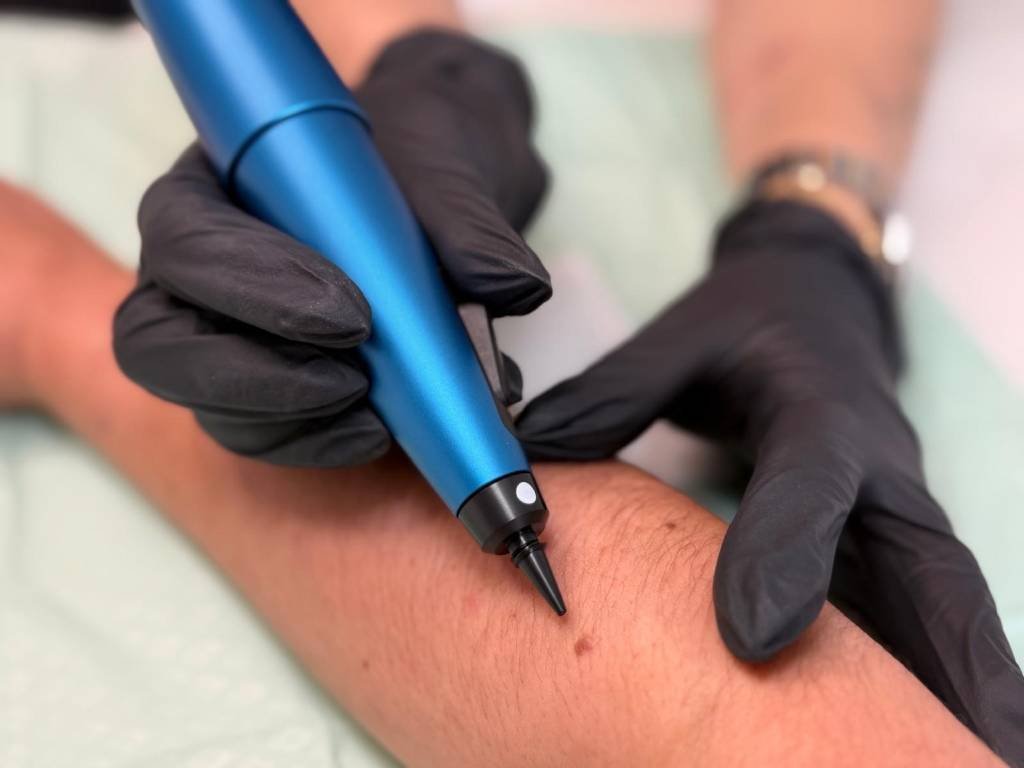
How can a mole be removed?
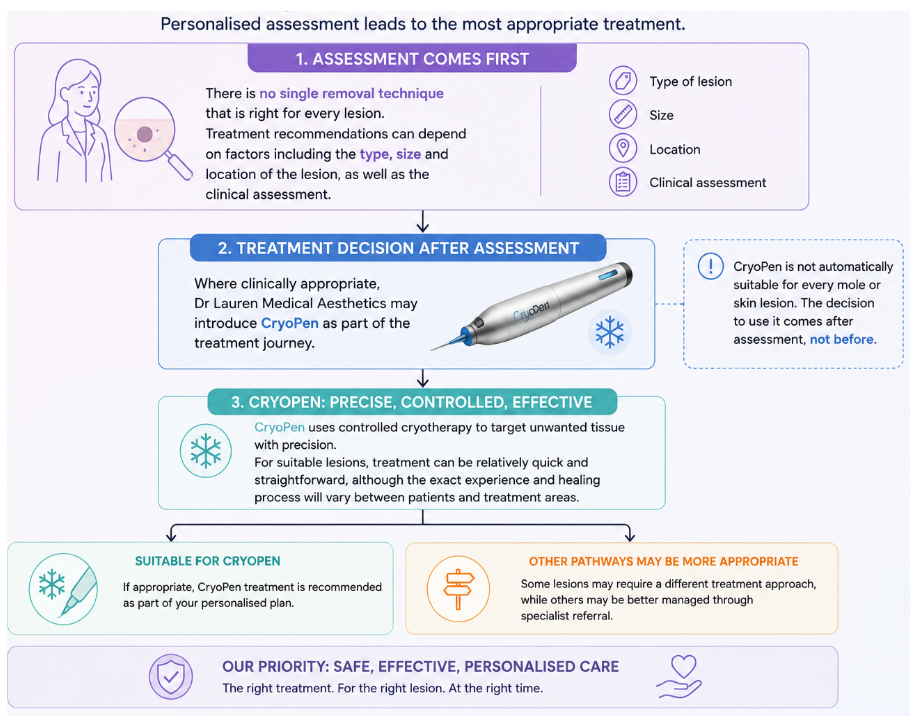
The aim is therefore not to fit every patient into the same treatment. It is to recommend an approach that is appropriate for the individual lesion.
What happens after mole removal?
Removal is not the end of the clinical journey. Good aftercare and follow-up are important parts of the process.
Following treatment, the treated area may experience temporary changes depending on the technique used. With cryotherapy, for example, patients may notice redness, crusting or other temporary changes as the skin heals.
You will be given clear aftercare advice to help you understand how to care for the treated area during recovery.
As with any skin procedure, there is also the possibility of temporary or longer-lasting marking, pigmentation changes or scarring. Individual healing varies, so it is important to follow the recommended aftercare and allow the area time to recover.
A review around 3 – 4 weeks after treatment can provide an opportunity to check healing and determine whether anything further is required.
This follow-up reinforces the principle behind the entire service: removal is not simply a procedure; it is part of a complete clinical journey.
The Dr Lauren lesion removal journey
At Dr Lauren Medical Aesthetics, the new Skin Lesion Removal service is built around three straightforward stages:
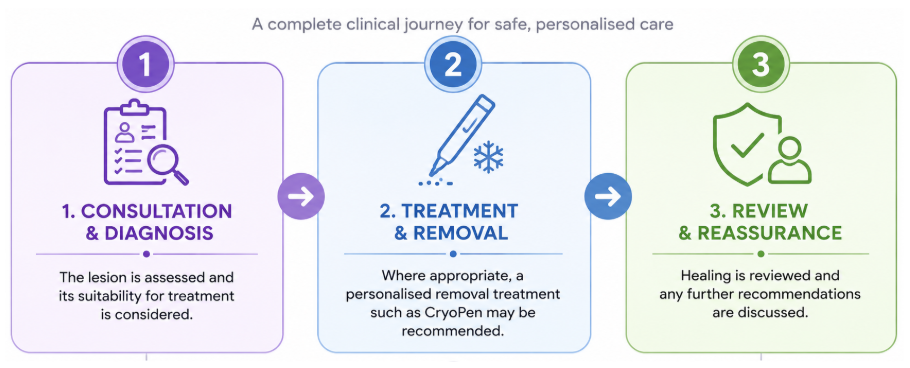
This approach gives patients something more valuable than simply a removal appointment: clinical reassurance and a structured pathway.
If you are considering a mole removal in Hamilton or Glasgow, the first question should not be “How quickly can this be removed?” Instead, it should be “Has this lesion been appropriately assessed?”
That distinction is crucially responsible for skin lesion removal.
Safe assessment comes first
Most moles are benign, and many skin lesions may be suitable for cosmetic removal. However, patients should never be expected to diagnose their own lesions or assume that every mole can simply be removed cosmetically.
A professional mole assessment provides the opportunity to establish what the lesion is, consider whether removal is appropriate and identify when specialist assessment may be needed.
At Dr Lauren Medical Aesthetics, every lesion removal follows a considered clinical journey; from thorough consultation and diagnosis, through appropriate treatment, to post-treatment review and reassurance.
Considering Having a Mole Removed?
Your first step is finding out exactly what you’re dealing with. Book your free consultation at Dr Lauren Medical Aesthetics for professional assessment and diagnosis of your skin lesion. If removal is appropriate, we’ll talk you through the safest treatment option and support you from consultation to removal and review.
BIBLIOGRAPHY
- Harley Street Prestige Medical – 2026 – What Is Mole Removal and How Do Dermatologists Decide the Safest Treatment Method? [online] Available at:
https://harleystreetprestigemedical.com/what-is-mole-removal-and-how-do-dermatologists-decide-the-safest-treatment-method/ - Dr Christopher Irwin – 2026 – Harmless Moles [online] Available at:
https://theskindoctor.melbourne/conditions/harmless-moles-naevi/ - Derma Surge Clinic – 2026 – How to Remove Unwanted Moles Safely [online] Available at:
https://dermasurge.co.uk/safe-mole-removal-techniques/ - Martine Jarman – 2026 – Skin Cancer Awareness Month: When Should You Get A Mole or Lesion Checked? [online] Available at:
https://skingeniusclinic.co.uk/blog/when-to-get-a-mole-checked/ - The Clifford Clinic – 2026 – High-Risk Moles: When Cosmetic Removal Becomes a Health Priority [online] Available at:
https://cliffordclinic.com/high-risk-moles-when-cosmetic-removal-becomes-a-health-priority/ - Pink Laser Clinics – 2026 – Cosmetic mole removal vs surgical excision [online] Available at:
https://www.pinklaserclinics.com.au/blogs/the-skin-lesion-guide/cosmetic-mole-removal-vs-surgical-excision