Why Aesthetics Regulation Is in the Spotlight Right Now
Over the past decade, non-surgical aesthetic treatments have grown rapidly across the UK. From anti-wrinkle injections and dermal fillers to skin rejuvenation procedures, more people than ever are exploring ways to look and feel their best.
In Scotland, this surge in demand has brought important questions into sharper focus: Who should be allowed to perform aesthetic treatments? Where should they take place? And how can patients be confident they are safe?
Recent developments in Scottish aesthetics regulation aim to answer these questions clearly and consistently. The new bill introduced by the Scottish Government marks a significant step toward strengthening standards across the industry.
For patients, this is welcome news; but it’s also important to understand what these changes mean in practice.
This blog outlines what has changed, why it matters, and how these new standards support both patients and responsible clinics.

What Has Changed: A Simple Overview of the New Scottish Bill
The new legislation introduces stricter oversight of non-surgical cosmetic procedures across Scotland. While exact implementation details are being phased in, the key pillars include:
- Setting a minimum age requirement for patients to undergo treatments
- Clearer definitions of which treatments are considered higher risk
- Licensing requirements for clinics offering certain aesthetic procedures
- Minimum training and qualification standards for practitioners
- Greater accountability and inspection powers for regulatory bodies
In simple terms, the bill formalises Scottish aesthetics regulation in a way that prioritises patient protection. It aims to ensure that aesthetic procedures are carried out by appropriately trained professionals in safe, regulated environments.
This brings Scotland closer to a medical-model framework for medical aesthetics Scotland, recognising that even “non-surgical” treatments can carry clinical risks and should be treated with the same seriousness as other medical procedures.
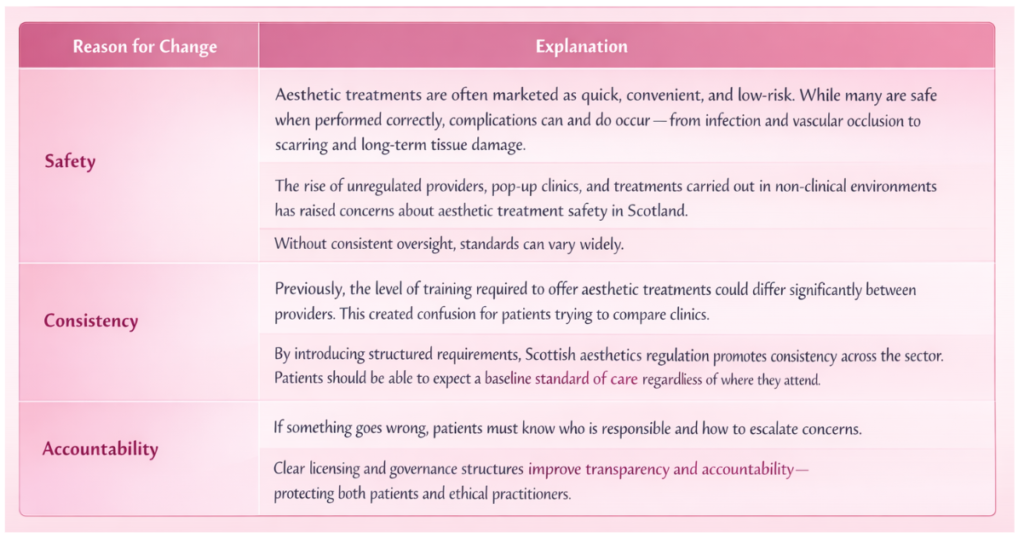
Why the Changes Were Needed: Safety, Consistency, Accountability
What This Means for Patients
1. Who Can Treat
One of the most important outcomes of the new framework is clarity around who should be performing higher-risk aesthetic procedures.
While some treatments may still be delivered by trained non-medical practitioners under appropriate supervision, there is a strong shift toward clinically led models of care.
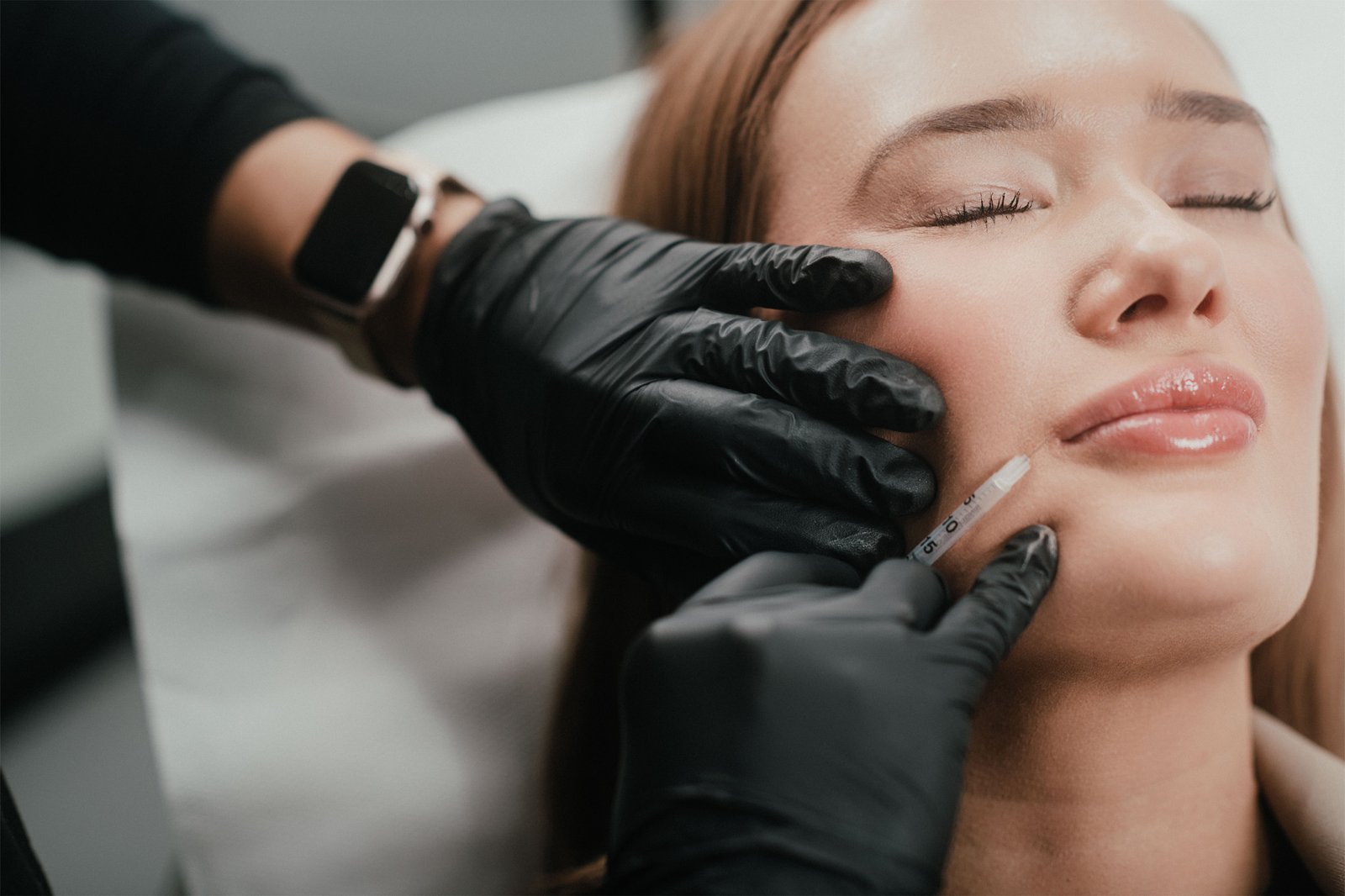
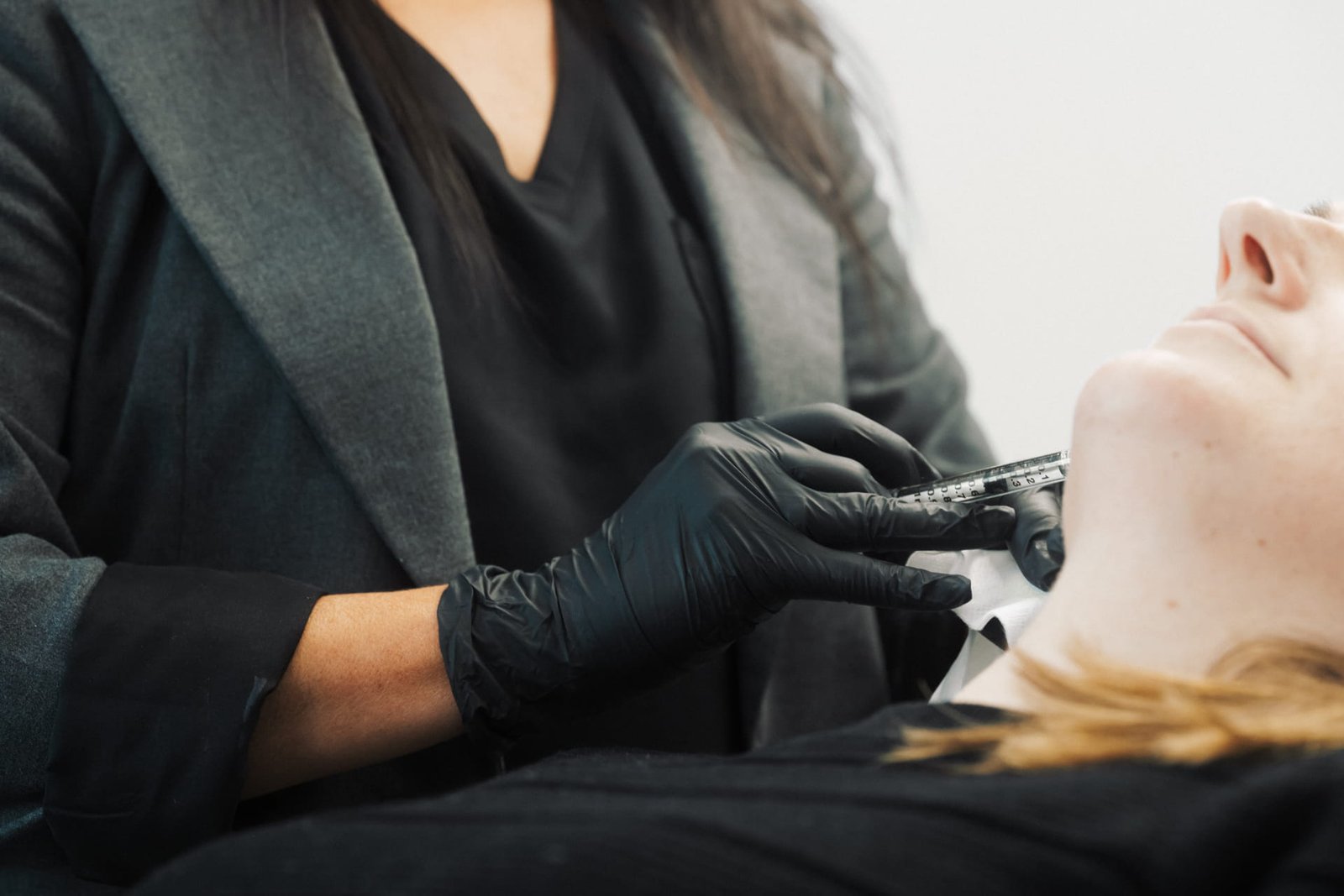
This is particularly important for injectable treatments, which require detailed anatomical understanding and the ability to manage medical complications.
Clinics operating under a doctor-led aesthetics model are already aligned with this direction of travel. In such settings, medical professionals oversee clinical decisions, complication management, and governance.
For patients, this means greater reassurance that the person treating them is qualified, insured, and accountable.
2. Where Treatments Can Take Place
The days of aesthetic treatments being performed casually in hotel rooms, salons without medical oversight, or private homes are increasingly numbered.
Under the new bill, licensed premises will be required for certain procedures. This ensures:
- Clean, clinical environments
- Proper infection control protocols
- Secure storage of medical products
- Clear emergency procedures
For those seeking medical aesthetics in Hamilton or treatment elsewhere in Scotland, this means clinics must meet defined environmental and safety standards.
The setting matters. A safe clinical environment is not just about appearances; it directly impacts patient safety.
3. Why Training and Oversight Matter
Aesthetic medicine blends artistry with clinical science. While outcomes are aesthetic, the procedures themselves are medical in nature.
Appropriate training ensures practitioners understand:
- Facial anatomy and vascular structures
- Safe injection techniques
- Product selection and dosage
- Recognition and management of complications
Oversight ensures that learning does not stop after a single course. Ongoing professional development, audit processes, and peer review are essential components of safe medical aesthetics in Scotland.
This is why governance structures and medical leadership are central to modern aesthetic practice.
What Patients Should Look for in a Clinic
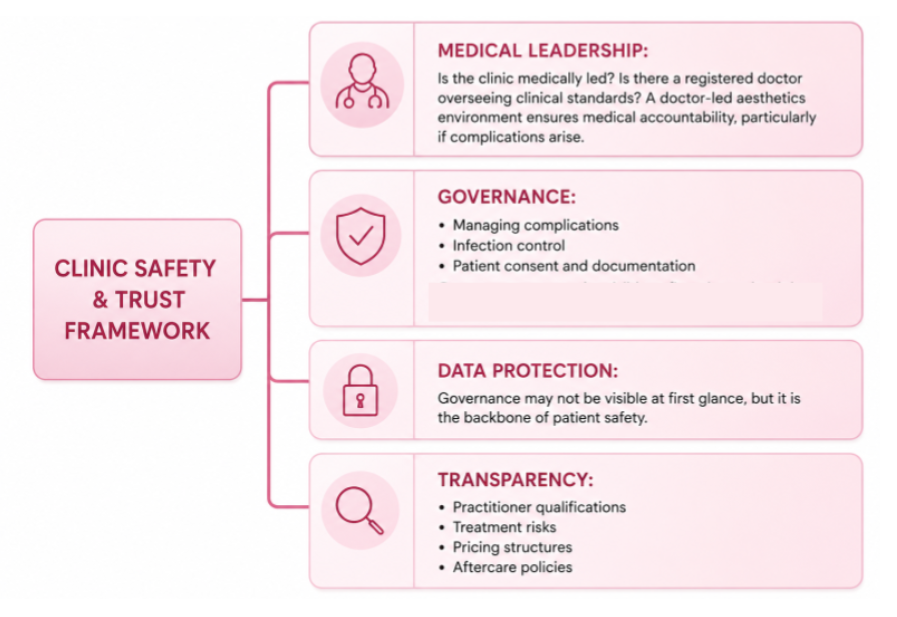
You should never feel pressured or rushed into a decision. Ethical practice prioritises informed consent over sales.
Dr Lauren’s Perspective: Why Regulation Protects Good Clinics and Patients
From a clinical standpoint, stronger Scottish aesthetics regulation is not about restriction; it’s about protection.
High-quality clinics have long invested in medical oversight, advanced training, insurance, and governance systems. For them, these changes simply formalise what responsible practice already looks like.
Regulation levels the playing field. It helps distinguish properly run medical clinics from unregulated providers operating without sufficient safeguards.
Most importantly, it reinforces a core principle: aesthetic treatments are medical procedures. They deserve medical standards.
For clinics specialising in medical aesthetics in Hamilton, alignment with national regulatory standards demonstrates commitment to excellence, patient welfare, and long-term trust.

Conclusion
Change in regulation can sometimes create uncertainty. However, in this case, the direction is clear and positive.
The new framework strengthens aesthetic treatment safety in Scotland, improves consistency across medical aesthetics in Scotland, and supports patients in choosing a safe aesthetics clinic with confidence.
For patients attending doctor-led clinics, these regulations provide reassurance that safety, training, and governance are not optional extras; they are foundational standards.
Ultimately, robust Scottish aesthetics regulation protects everyone:
- Patients receive safer care
- Ethical practitioners are supported
- The industry earns greater public trust
As aesthetic medicine continues to evolve, regulation ensures it does so responsibly, with patient wellbeing at its core.
If you are considering treatment, ask questions, understand your provider’s qualifications, and prioritise medical oversight. Safe, effective aesthetic care should always begin with informed choice and clinical integrity.
Bibliography:
- Sophia Fai Rochie – 2026 – Scottish Parliament backs Non-Surgical Procedures Bill [online] Available at:
https://aestheticsjournal.com/news/scottish-parliament-backs-non-surgical-procedures-bill/ - Harley Academy – 2025 – Scotland to Introduce Aesthetics Regulation Bill by May 2026 [online] Available at:
https://www.harleyacademy.com/aesthetic-medicine-articles/scotland-to-introduce-aesthetics-regulation-bill-by-may-2026/ - Give Consulting – 2025 – Scottish Government Recommendations on Aesthetics Licensing: What Practitioners Need to Know [online] Available at:
https://give-consulting.co.uk/scottish-government-recommendations-on-aesthetics-licensing-what-practitioners-need-to-know/