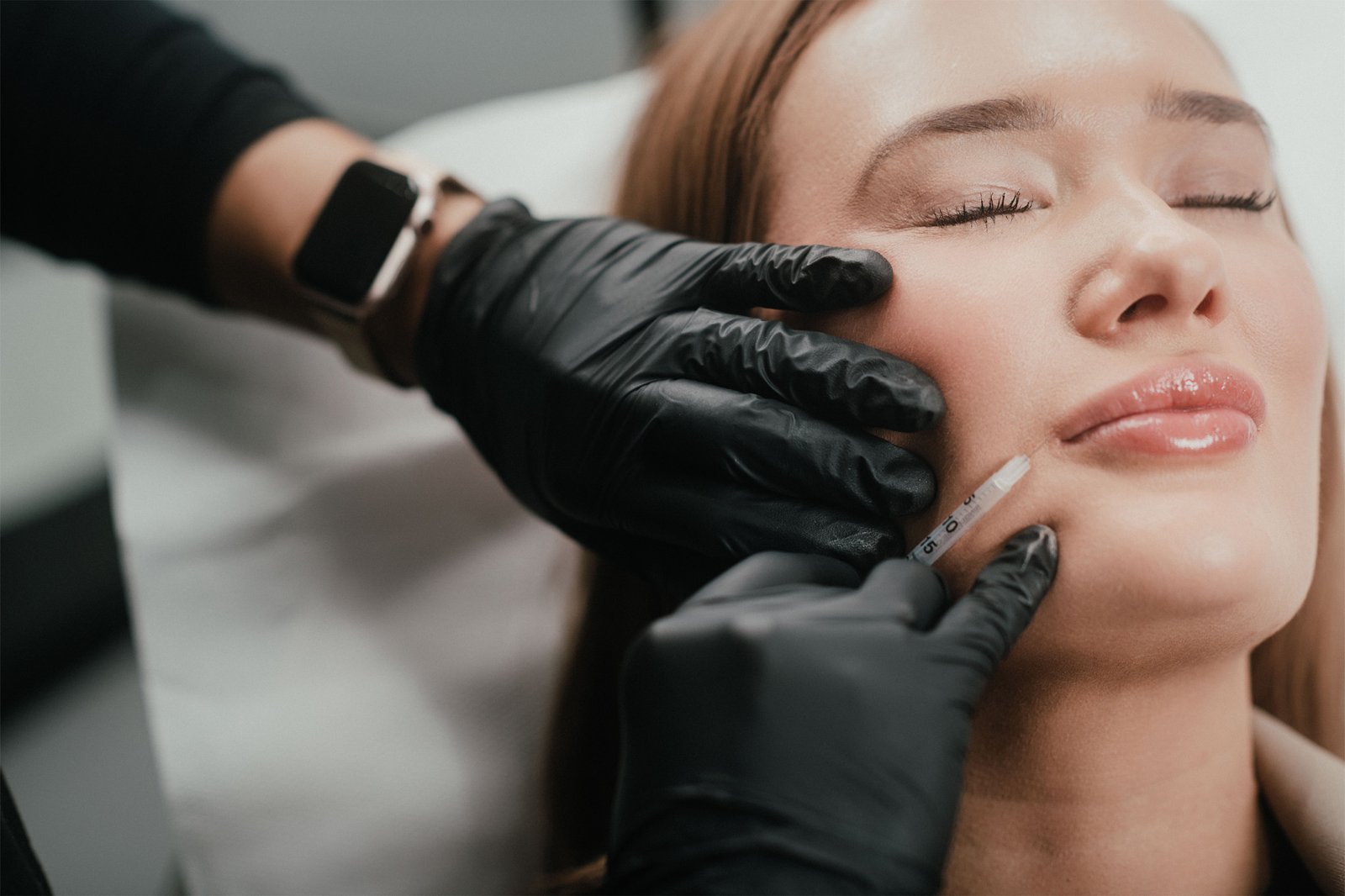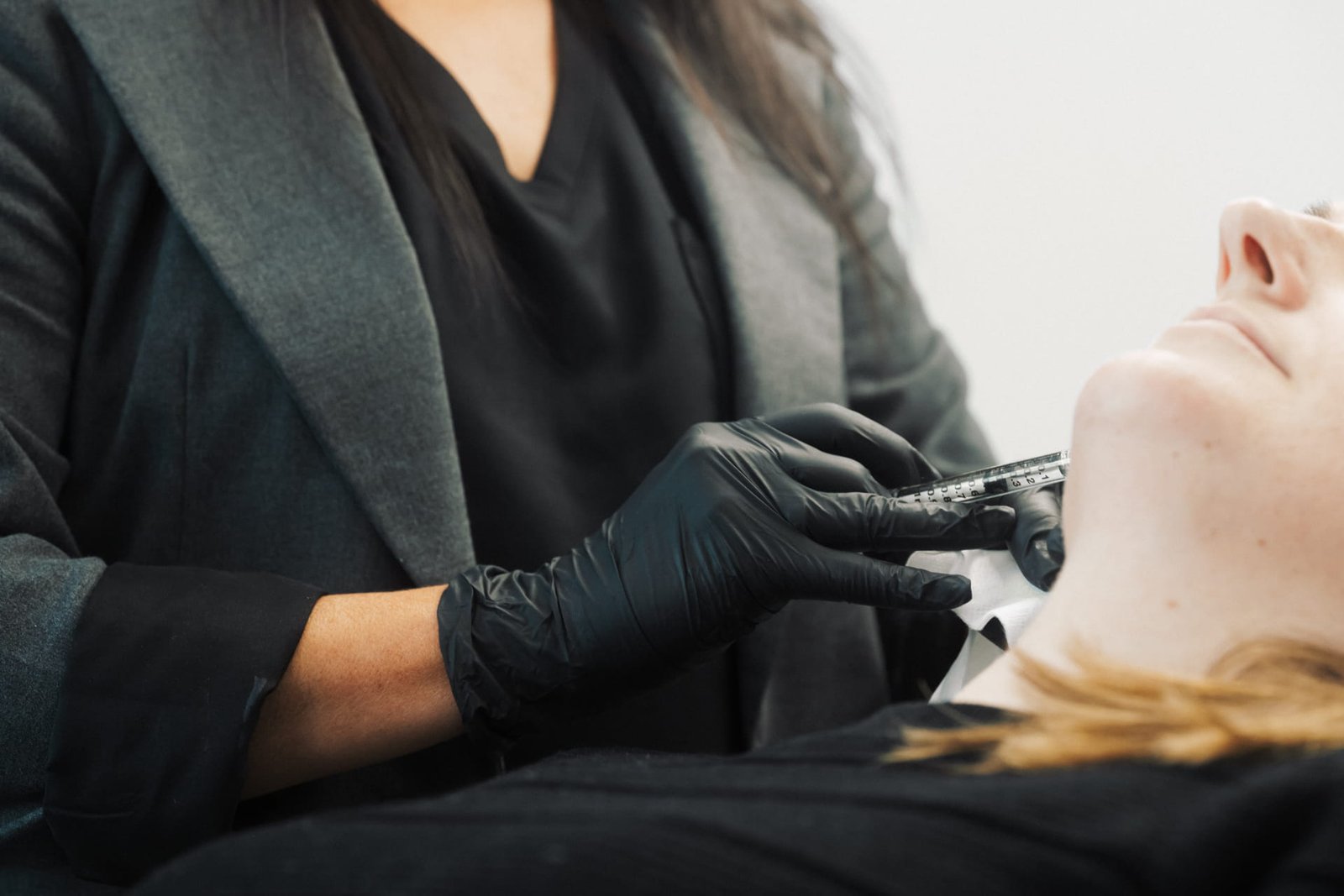
As people begin to notice signs of ageing, attention often shifts from the upper face to the lower face and neck, areas that change in different and often more complex ways.
While treatments for forehead lines and crow’s feet are widely known, many patients are surprised to learn that anti-wrinkle treatment neck procedures can also help soften certain signs of ageing in the jawline and neck.
However, the lower face and neck require a very different approach compared to the upper face. These areas involve larger muscles, delicate balance between facial expressions, and structures that influence both appearance and function.
When performed carefully by experienced practitioners, lower face anti-wrinkle injections can improve contour, reduce muscle tension, and create a smoother, more balanced profile.
Understanding how these treatments work (and when they are appropriate) is key to achieving natural-looking results.
Why the Lower Face and Neck Age Differently
The lower face and neck age differently from the upper face due to several anatomical and structural factors. Over time, skin elasticity decreases, fat compartments shift, and muscles in the neck and jaw become more pronounced.
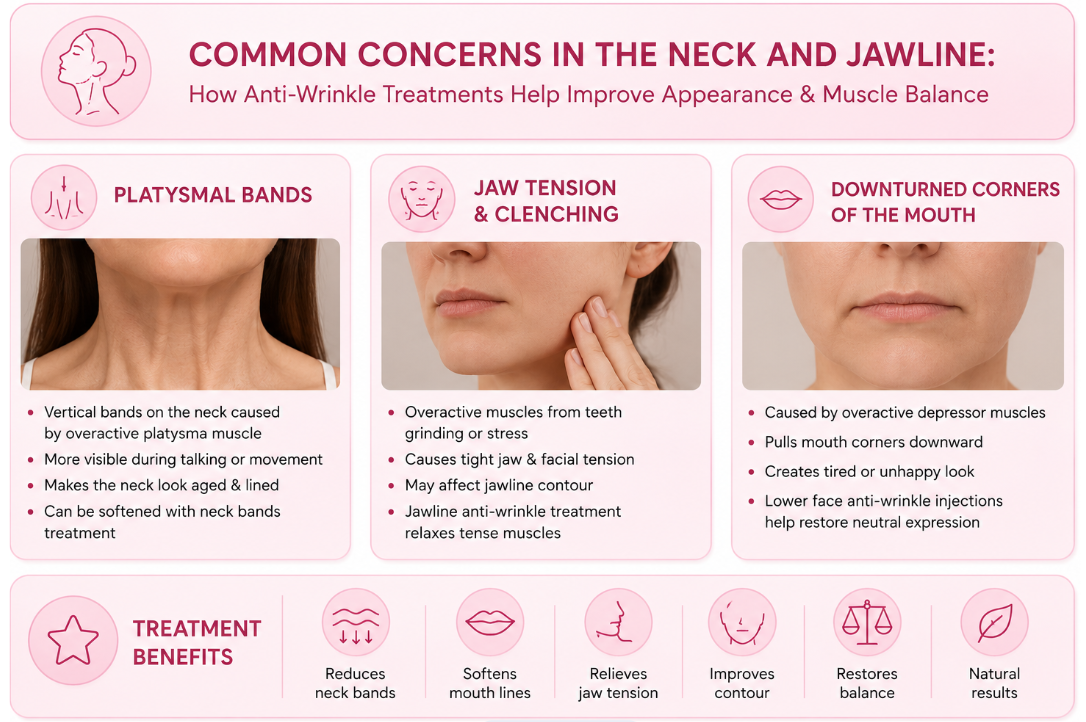
One of the primary muscles involved in neck ageing is the platysma, a thin sheet-like muscle that runs from the collarbone to the jawline. As the platysma becomes more active and skin loses elasticity, vertical bands may become visible along the neck.
At the same time, repeated facial expressions and muscle tension around the mouth and jaw can contribute to:
- Downward pull at the corners of the mouth
- Jawline softening
- Increased neck band visibility
- Jaw clenching and tension
Because these muscles interact closely with facial expressions and posture, treating the area requires careful understanding of facial dynamics.
Common Concerns in the Neck and Jawline
Patients seeking jawline anti-wrinkle treatment or anti-wrinkle treatment neck procedures typically present with a combination of aesthetic and muscular concerns.
Why This Area Requires Expertise
The neck and jawline are among the most technically demanding areas in medical aesthetics. The muscles here are larger and more interconnected than those in the upper face, meaning small adjustments can influence facial balance significantly.
Several factors make treatment more complex:
- Multiple muscles interact to control mouth and neck movement
- Small dosage variations can affect facial expressions
- The area contains important vascular and nerve structures
- Over-treatment may affect swallowing, speaking, or natural expression
Because of these complexities, subtlety is essential. The goal is not to freeze movement but to soften excessive muscle activity while preserving natural facial dynamics.
This is why experienced clinicians emphasise careful assessment before recommending anti-wrinkle treatment neck procedures.
How Anti-Wrinkle Treatment Can Help
When performed correctly, anti-wrinkle treatments can provide several benefits in the lower face and neck.
- Relaxing Overactive Muscles
One of the primary functions of these treatments is to relax muscles that contribute to visible ageing signs.
For example, relaxing the platysma muscle can reduce the appearance of vertical neck bands, which is why neck bands treatment is commonly requested by patients seeking a smoother neck profile.
Similarly, relaxing certain muscles near the mouth can soften downward pulling that contributes to a tired facial appearance.
- Improving Contours
In some cases, reducing excessive muscle activity can subtly improve the contour of the jawline and neck.
For instance, relaxing the platysma can reduce the downward pull on the jawline, allowing the area to appear slightly more defined. This is one reason why jawline anti-wrinkle treatment is sometimes used as part of a broader facial rejuvenation plan.
However, it is important to note that these treatments work best when muscle activity is the main contributor to the concern. Structural issues such as skin laxity or fat deposits may require different approaches.
- Supporting Harmony with the Face
The most effective aesthetic treatments focus on overall facial harmony rather than isolated features.
By carefully balancing muscle activity in the lower face and neck, practitioners can help maintain a smoother transition between the face and neck.
When combined with treatments in the upper face, lower face anti-wrinkle injections can contribute to a more balanced and refreshed appearance.
Who May Benefit (and Who May Not)
Not everyone is an ideal candidate for anti-wrinkle treatment neck procedures. The effectiveness of treatment depends largely on the underlying cause of the concern.
People who may benefit include:
- Individuals with visible platysmal neck bands
- Patients with downward pulling at the mouth corners
- Those experiencing jaw tension related to muscle overactivity
- Individuals seeking subtle improvements rather than dramatic changes
However, patients with significant skin laxity, excess fat under the chin, or advanced ageing may require different treatments such as skin tightening procedures or other aesthetic approaches.
A proper assessment helps determine whether jawline anti-wrinkle treatment is appropriate or whether alternative options may be more effective.
Safety Considerations: Dosing, Placement, Expectations
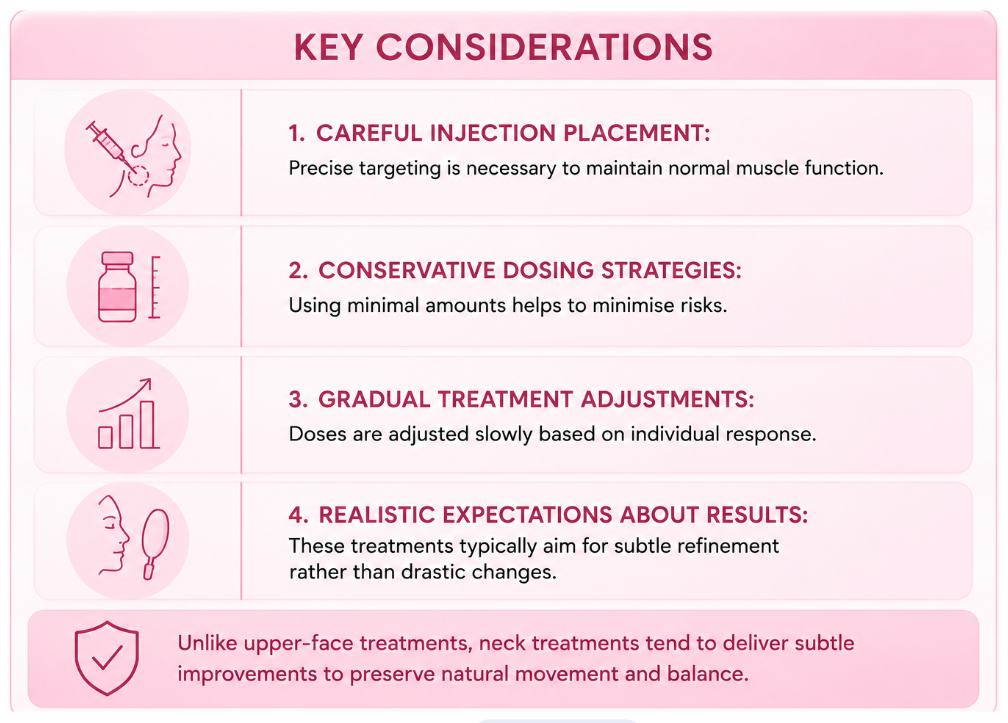
Safety is especially important when treating the neck and lower face. These areas control essential functions, so precise dosing and placement are critical.
Why Doctor-Led Assessment Matters
Due to the anatomical complexity of the lower face and neck, many clinics emphasise doctor-led consultations before performing these treatments.
A doctor-led assessment allows for:
- Detailed facial anatomy evaluation
- Identification of the underlying cause of neck or jawline concerns
- Personalised treatment planning
- Discussion of risks and realistic outcomes
Clinics offering medical aesthetics in Hamilton often follow this approach to ensure that treatments are appropriate and performed safely.
Experienced practitioners understand that the neck and jawline are not areas where “one-size-fits-all” treatment plans work. Individual anatomy and muscle patterns must guide every decision.
Natural Results Over Dramatic Change
When considering anti-wrinkle treatment neck procedures, the most important goal should always be natural-looking improvement.
The neck and jawline are highly visible areas that influence overall facial balance. Subtle refinements that soften muscle activity and improve contours often produce the most pleasing results.
Patients seeking lower face anti-wrinkle injections should focus on gradual enhancement rather than dramatic alteration.
With careful planning, skilled technique, and proper assessment, treatments can help maintain harmony between the face and neck while preserving natural expression.
Ultimately, the best outcomes come from a thoughtful approach; one that prioritises facial balance, patient safety, and realistic expectations.
Bibliography:
- Mary Basiadima – 2025 – Can Anti-Wrinkle Injections Help My Double Chin? [online] Available at:
https://londonpremierlaser.co.uk/blog/can-anti-wrinkle-injections-help-my-double-chin/ - Dr Janice Brown – 2025 – Anti-wrinkle Injections for Jowls, Platysmal Bands, and Neck Tightening [online] Available at:
https://janicebrown.co.uk/anti-wrinkle-jawline-neck-platysmal-bands/ - Dr Raquel Amado – 2025 – Why the Neck Gives Away Your Age — Anti-Wrinkle Treatments Can Help [online] Available at:
https://skinandmedicalcosmetics.co.uk/why-the-neck-gives-away-your-age-anti-wrinkle-treatments-can-help/