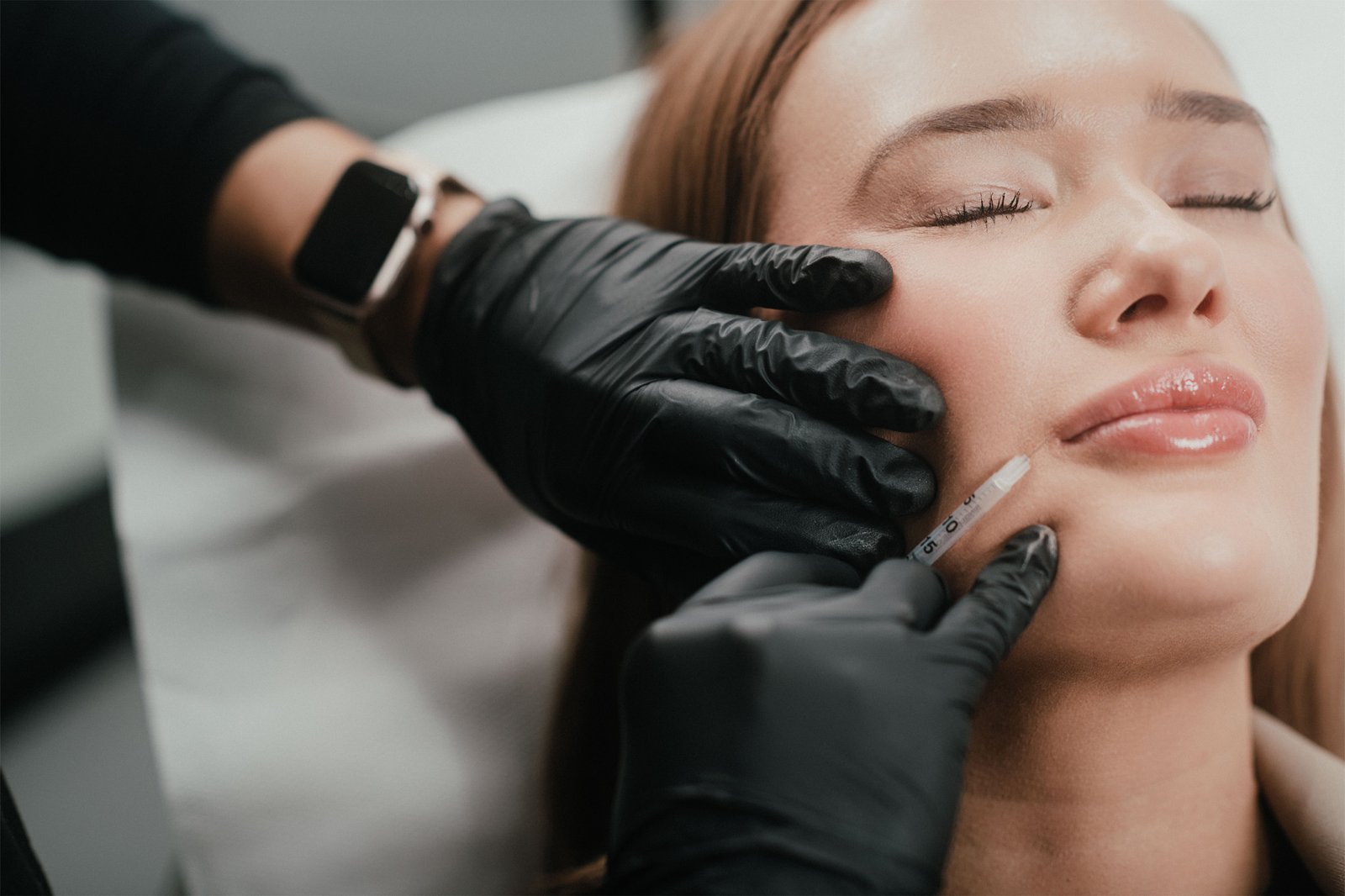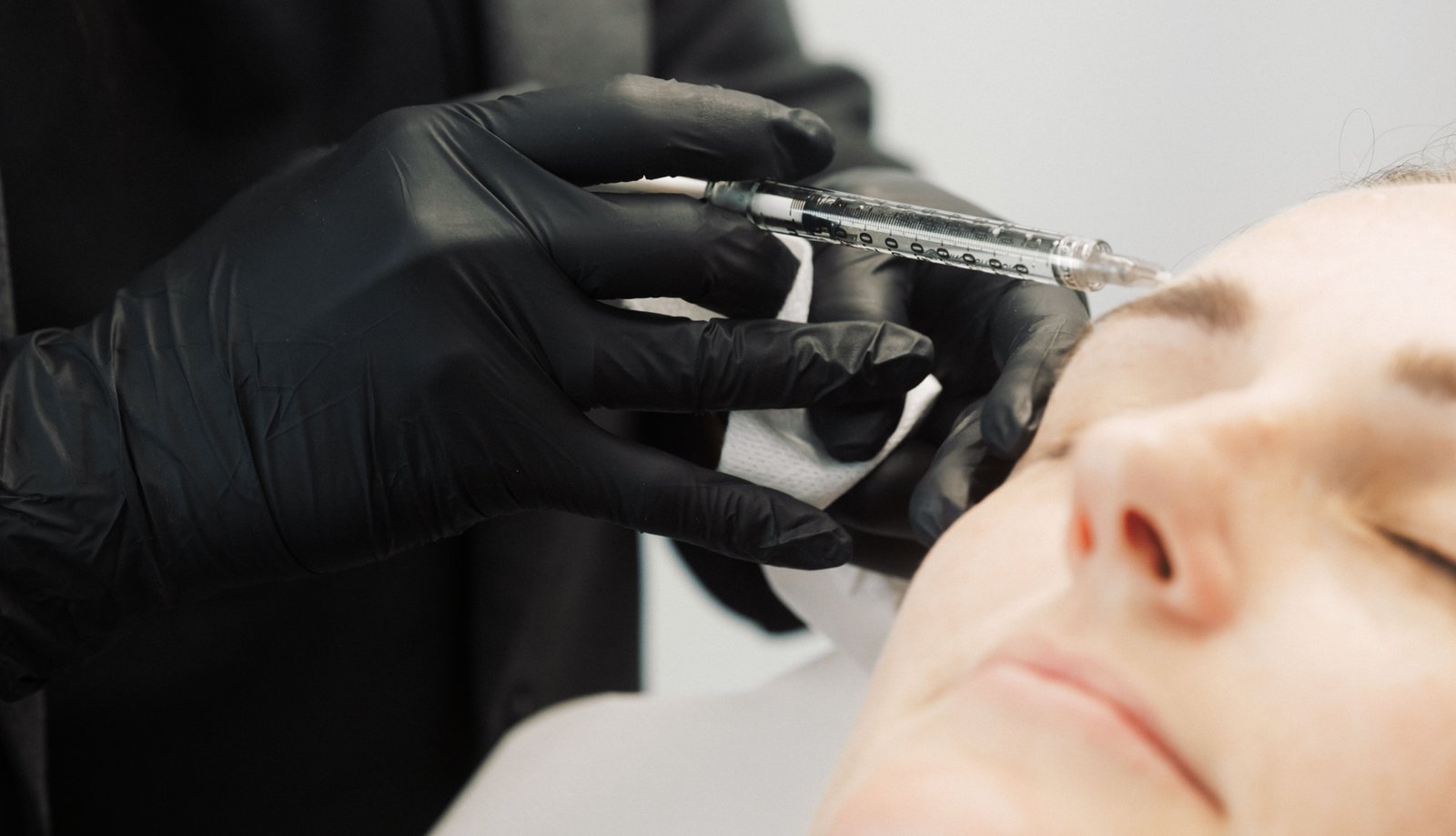
The popularity of cosmetic injectables has grown rapidly over the last decade. Treatments such as Botox and dermal fillers are now widely accessible, with more people seeking non-surgical ways to refresh and maintain their appearance.
While these treatments can produce excellent outcomes, one growing concern within the aesthetics industry is over-treatment. Increased accessibility, social media trends, and the pressure to achieve instant transformation have all contributed to a rise in patients receiving treatments too frequently or in excessive amounts.
Unfortunately, this can lead to unnatural outcomes, facial imbalance, and the dreaded “overfilled” appearance.
Today, the most respected practitioners are shifting the conversation away from dramatic change and toward refinement, balance, and longevity. Patients are increasingly searching for natural Botox results in the UK and subtle filler results that enhance rather than overpower their features.
Injectables done properly are not about doing more. They are about understanding timing, respecting facial anatomy, and exercising restraint.
Why timing matters
One of the biggest misconceptions in aesthetic medicine is that more frequent treatment automatically produces better results. In reality, allowing treatments time to settle is one of the most important factors in achieving refined, natural-looking outcomes.
Botox and dermal fillers behave differently once injected. Botox gradually relaxes muscles over several days, while fillers integrate into the tissue over weeks. Assessing results too early or retreating too quickly can lead to unnecessary corrections and excessive product use.

1. The importance of treatment intervals
Appropriate spacing between appointments allows:
- Swelling to fully subside
- Muscles to respond naturally
- Fillers to settle into surrounding tissue
- Facial balance to be accurately assessed
- Adjustments to be made conservatively
When treatments are rushed, patients may end up layering products on top of unresolved swelling or temporary asymmetry.
2. Typical treatment timelines
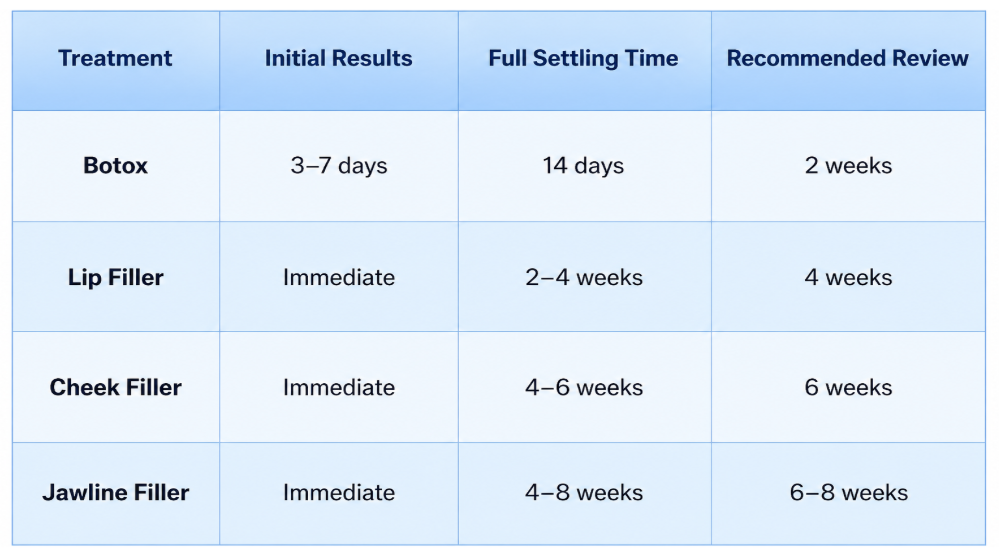
These timelines vary depending on the patient, product, and treatment area, but they highlight why patience is essential.
3. The risks of treating too frequently
Overlapping treatments can gradually distort facial proportions. Patients who repeatedly top up filler before the previous product has properly settled may eventually develop puffiness, heaviness, or migration.
This is particularly common in:
- Lips
- Cheeks
- Under-eye areas
- Jawline contours
The process often happens slowly, making it difficult for patients to notice changes over time.
4. Treatment timing flow
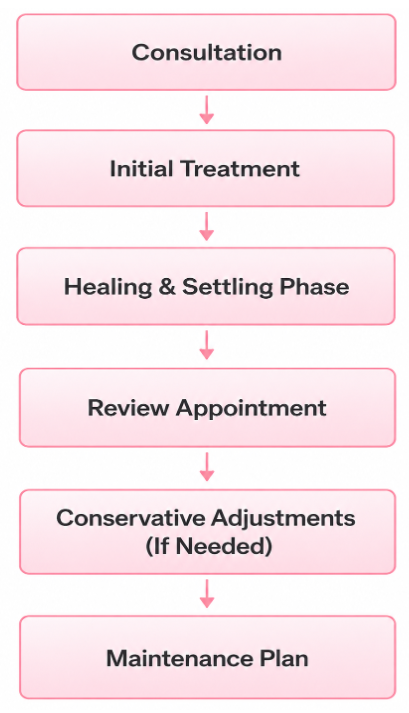
A measured approach supports safer, longer-lasting, and more balanced outcomes.
The role of restraint
In aesthetics, restraint is not a limitation; it is a skill. The best injectable work is often the least noticeable.
Patients rarely seek treatment because they want to look artificial. Most want to appear fresher, healthier, or more rested while still looking like themselves. This is where subtle filler results become so important.
A restrained approach focuses on enhancement rather than transformation.

1. Why subtle results matter
Subtle treatments preserve:
- Facial movement
- Individual facial character
- Harmony between features
- Age-appropriate appearance
- Long-term skin quality
Overcorrection, by contrast, often creates imbalance. Excessive filler volume can widen the face, flatten natural contours, and reduce facial expressiveness.
2. Natural vs overfilled approach
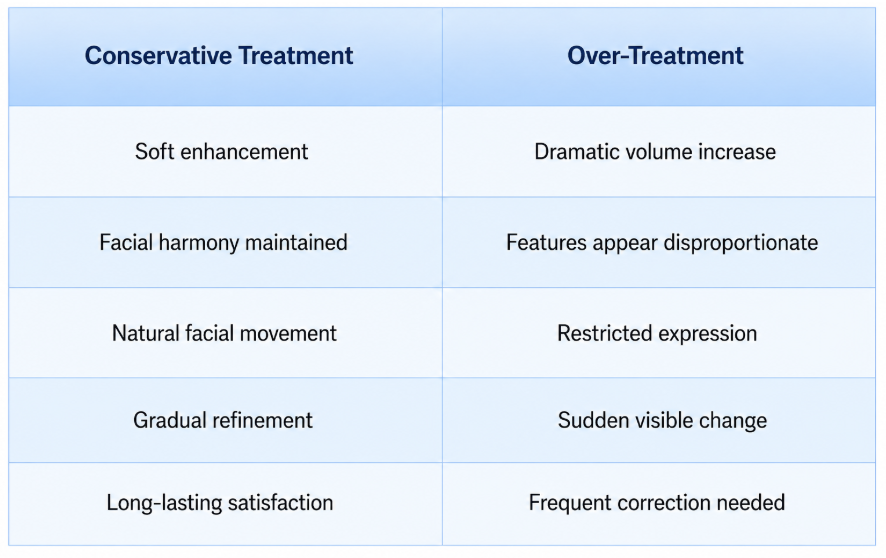
Patients searching for ways to avoid an overfilled look are increasingly recognising that natural aesthetics require moderation.
Long-term planning
Successful injectable treatments should never be reactive. They should form part of a structured, personalised strategy.
Too often, patients seek treatment impulsively; adding filler to isolated areas without considering overall facial balance or long-term effects. This piecemeal approach can eventually create inconsistency and over-treatment.
This is where aesthetic treatment planning becomes essential.
1. What is aesthetic treatment planning?
Aesthetic planning involves creating a phased approach based on:
- Facial anatomy
- Ageing patterns
- Skin quality
- Lifestyle factors
- Long-term goals
- Budget and maintenance expectations
Rather than continuously adding product, a structured plan prioritises the right treatment at the right time.
2. Prevention is better than correction
Correcting overfilled or poorly planned treatments can be difficult. Dissolving filler, reversing complications, or restoring natural facial proportions often requires additional time, expense, and emotional stress.
Preventative planning helps patients:
- Maintain facial balance
- Avoid excessive product build-up
- Age more naturally
- Require fewer corrective procedures
The best outcomes are rarely created in a single appointment. They are built gradually and thoughtfully.
Doctor-led approach
The quality of injectable treatments depends heavily on the expertise and judgement of the practitioner performing them.
A truly doctor-led approach to aesthetics in the UK prioritises patient safety, ethical decision-making, and long-term wellbeing over quick sales or trend-driven treatments.
1. Why medical expertise matters
Injectables are medical procedures, not beauty trends. Understanding facial anatomy, vascular structures, ageing processes, and complication management is essential.
Doctor-led care offers several advantages:
- Comprehensive facial assessment
- Individualised treatment planning
- Safer injection techniques
- Ability to manage complications
- Honest advice about when not to treat
Importantly, experienced practitioners understand when restraint is necessary.
2. Ethical decision-making in aesthetics
A good practitioner should be willing to say:
- “You do not need more filler.”
- “We should wait before adding additional products.”
- “Another treatment may suit you better.”
These conversations protect patients from unnecessary procedures and support healthier long-term outcomes.
3. Patient-first decision framework
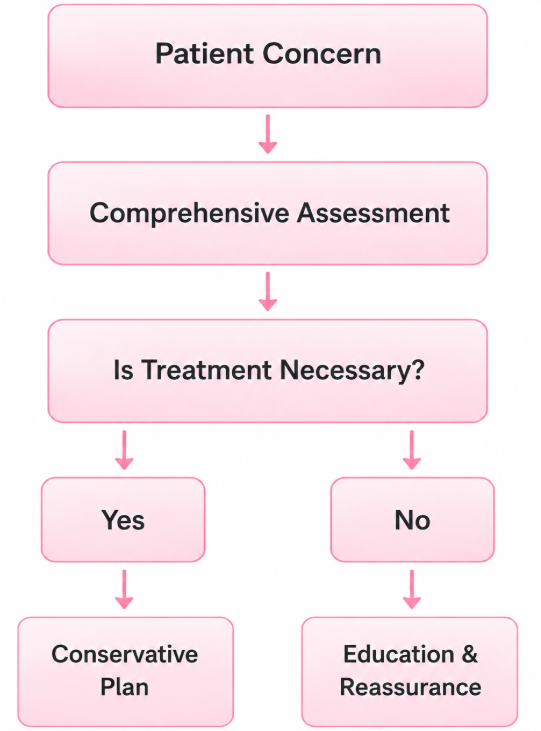
Ethical aesthetics are built on trust, education, and realistic expectations.
Patients seeking natural Botox results in the UK increasingly value practitioners who focus on subtlety and facial integrity rather than dramatic transformation.
Conclusion
The future of aesthetics is moving away from excess and toward refinement. As more patients become aware of the risks associated with over-treatment, the value of timing, restraint, and long-term planning becomes increasingly clear.
Injectables done properly should enhance confidence without erasing individuality. They should support facial harmony rather than create obvious alteration.
Whether the goal is smoother skin, restored volume, or refreshed appearance, the best results are almost always the most balanced and understated.
Patients who prioritise subtle filler results, thoughtful aesthetic treatment planning, and a doctor-led approach to aesthetics in the UK are far more likely to achieve outcomes that remain elegant over time.
In aesthetics, less is not less.
Less, done well, delivers the best results.
BIBLIOGRAPHY
- Self London – 2026 – How soon is too soon to get injectable treatments? [online] Available at:
https://selflondon.com/how-soon-is-too-soon-to-get-injectable-treatments/ - Elite Medical and Aesthetics – 2026 – An Inside Into Facial Balancing [online] Available at:
https://www.emacolorado.com/an-inside-into-facial-balancing/ - Alora Aesthetics – 2026 – Why an Injectable Consultation Is the Key to Natural-Looking Results [online] Available at:
https://www.aloraaesthetics.com/why-an-injectable-consultation-is-the-key-to-natural-looking-results/ - Naples Cosmetic Surgery Center – 2026 – How Experienced Injectors Avoid Overfilling with Injectables [online] Available at:
https://www.naples-csc.com/blog/how-experienced-injectors-avoid-overfilling-with-injectables/ - Dr Joseph H. Chang – 2025 – Why Choosing an Experienced Injector Matters: The Art of Natural Looking Results [online] Available at:
https://modernaesthetic.institute/blog/why-choosing-an-experienced-injector-matters-the-art-of-natural-looking-results/